
The Arshed-Roy Art Collection
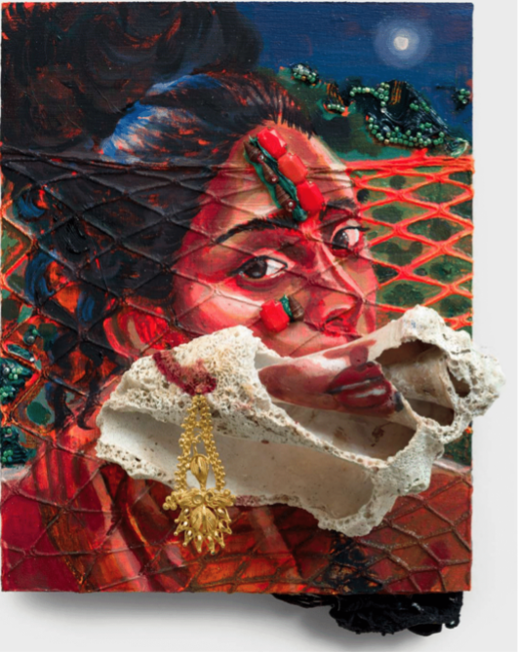
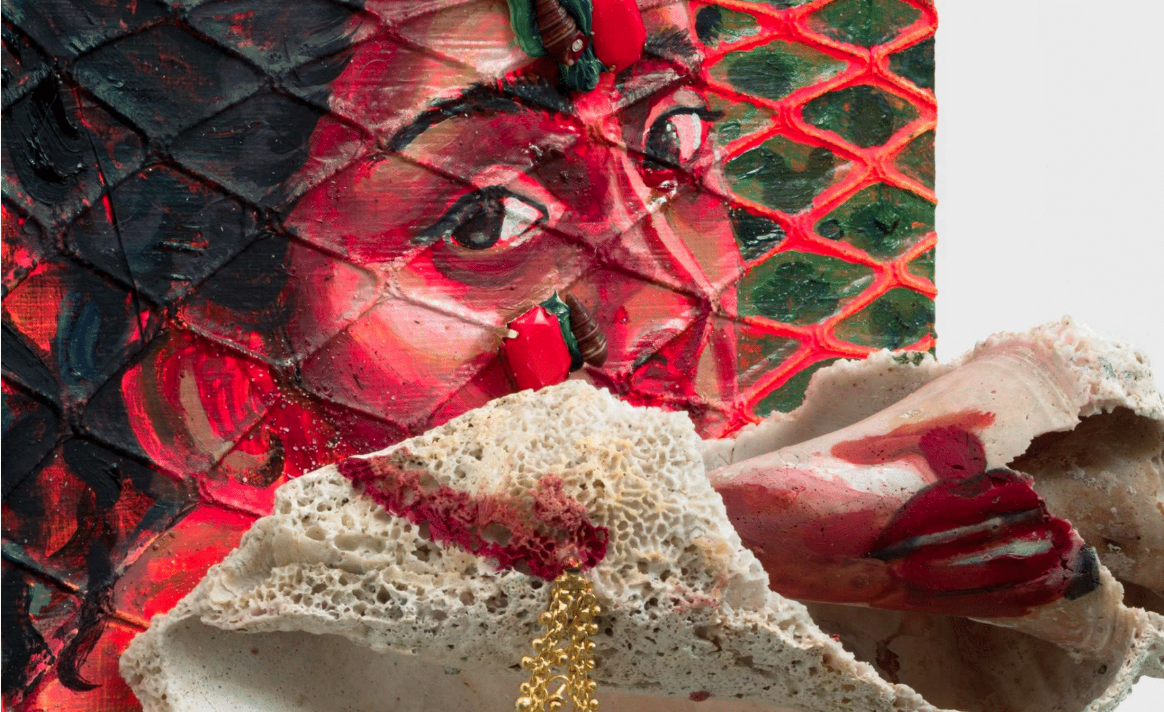
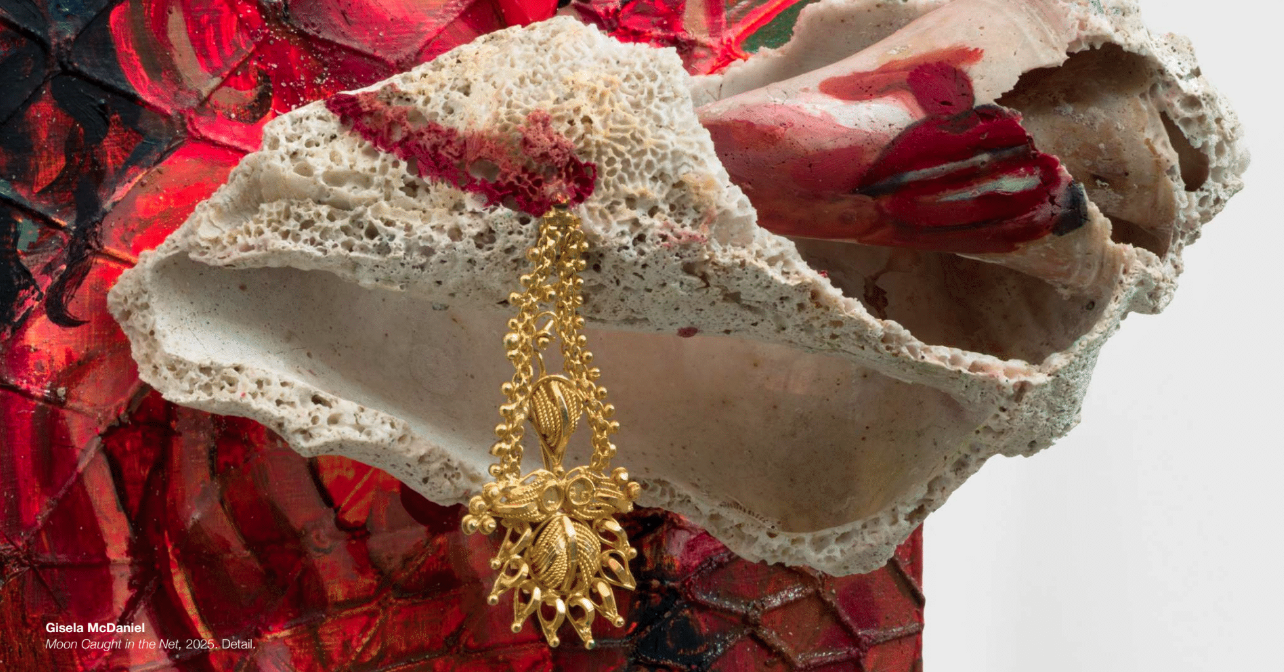
Moon Caught in the Net, 2025
Oil on panel, fishnet stocking, jewelry from collaborator, shells, found objects
10 x 9 x 5 inches
Unique work: Yes
Signature: on verso
Acquisition: Rajiv Menon Contemporary, Los Angeles
Includes a Certificate of Authenticity
Appraisal: YES
GISELA MCDANIEL, 1995
Gisela reaches into the history of her mother’s people, the CHamoru, Indigenous to Guam and the Mariana Islands of Micronesia. Centuries of Spanish colonialism and American militarism have placed their language, traditions, and sovereignty at risk. Through color, ornamentation, scarification, and beadwork, she restores what history has tried to erase.
Her practice is humanitarian, and her process disrupts the traditional power relationships between artist and sitter, viewer and subject. She does not simply depict the people she paints; she preserves their voices, embedding audio recordings of their stories directly into the canvas.
A violent crime against her person redirected her work toward those who had also survived violation: Black, Micronesian, Indigenous, Asian, Latinx, mixed-race people, outsiders, and sex workers. She entered their homes, recorded their stories, gathered objects of meaning, and created monumental portraits in which survivors inhabit their bodies fully, refusing to be reduced to the violence done to them.
Her practice has since expanded toward migration, traditional healers, and Indigenous mythologies. She foregrounds identities and values silenced by Western representation, making community leaders not only visible, but audible. Throughout her career, Gisela has returned to one essential question: Who decides what is seen, recorded, and collected?
This piece debuted at the 2025 India Art Fair. It portrays a girl trafficked across the porous border between Nepal and India, where unregulated crossings result in 100,000 girls a year, some as young as eight-years-old, being sold into sexual slavery—often by the very families meant to protect them. It feels as though she is indeed caught, displaced, hooked, the way a fish might be. The wedding jewelry is particularly poignant to us. When I was very young, I worked in Calcutta, India for Mother Teresa at the Kaligut temple where my job was to bathe dying women brought in off of the streets. I was struck how people whose limbs had atrophied and tucked in like bird wings, who couldn’t hold their heads erect, had a single gold earring left, a bangle, a testament to personal history, a ember of dignity. I think there are stories behind stories with this work.
Gisela is self-taught and has strong institutional appeal. Her first solo was with Playground Detroit; she now has international and domestic representation. Her work is part of the permanent collections of the Museum of Fine Arts Boston, New Orleans Museum of Art, Pérez Art Museum in Miami, Frye Art Museum in Seattle, Baltimore Museum of Art, Institute of Contemporary Art in Miami, among others. She just completed her first solo museum exhibition at Ogunquit Museum of American Art, Maine
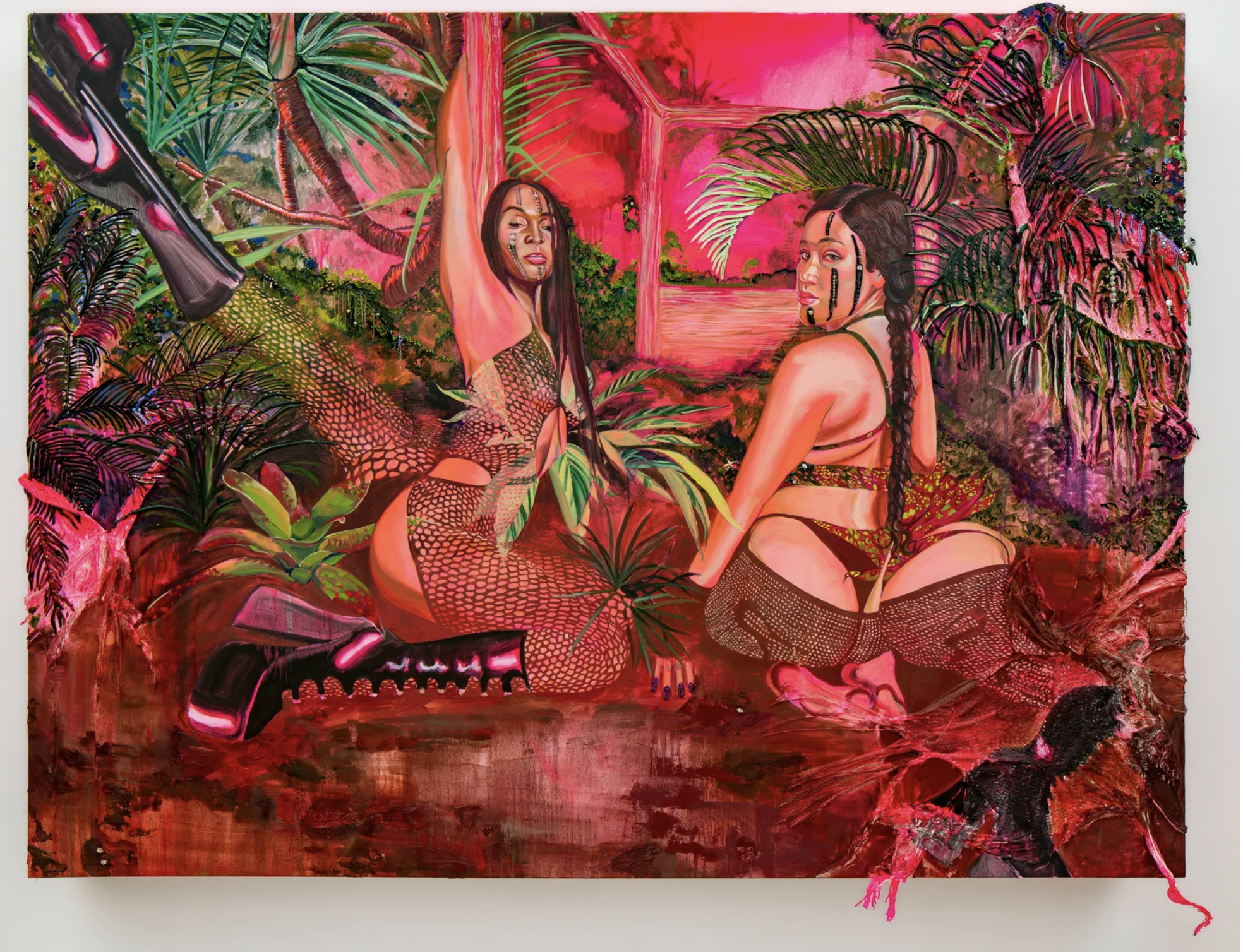
It's all mine, 2024
Oil on canvas, found object, sound
50 × 80 in
Unique work: Yes
Signature: on verso
Acquisition: Superposition
Includes a Certificate of Authenticity: YES
Appraisal: YES
RUGS
Shikargah, or Afghani Hunting Rugs. These are hand knotted, hand made and dyed using vegetable dyes. The material is Ghazni wool and cotton. Textile and rug production in the Afghan highlands predates recorded history, with archaeological fragments in northeastern Afghanistan carbon-dated as far back as the late second century
RICHARD MACDONALD (California, b.1946) bronze sculpture, "The Gymnast," Olympic gymnast over a ring, mounted to a marble plinth. Inscribed "R. MacDonald," dated 1995, 20" x 15.25" x 8" overall.
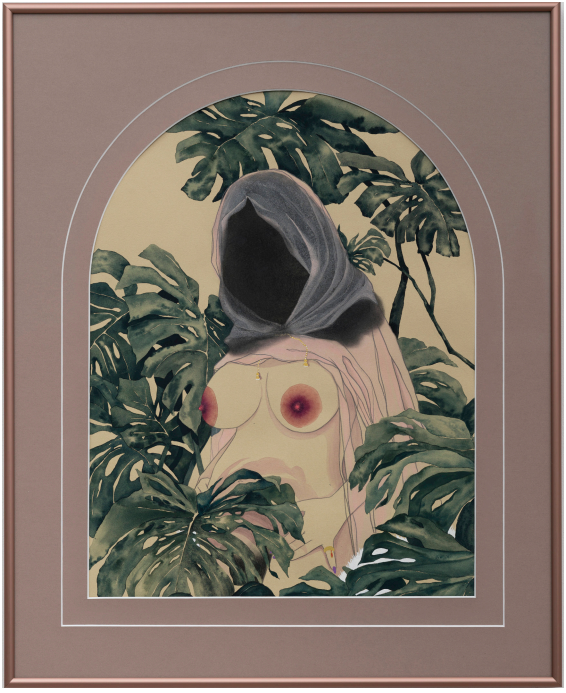
Rapt Beneath 2026
watercolour, gouache, pencil, charcoal on paper
24 x 20 in.,
Unique Work: Yes
Signature: on verso
Acquisition: Patel Brown
Includes Certificate of Authenticity
Appraisal: YES
We met Devan Patel of Patel Brown Toronto at Felix in Los Angeles. Generous spirit, compassionate soul with a strong gallery program which includes Mia Sandhu.
Mia Sandhu is a Punjabi Canadian artist whose practice explores identity, anonymity, sexuality, and sensual expression. We had never encountered portraiture quite like hers. Qasim observed that the obscuring of faces—particularly women’s faces—also carries cultural resonance within Pakistani society, where concealment can signify modesty, privacy, and protection from unwanted attention within traditions of purdah.
In Sandhu’s portraits, faces are often veiled by soft clouds of charcoal. At first, the figures appear almost erased. But the longer you look, the more the fog begins to thin. The contours of a face slowly emerge: the whites of the eyes, the suggestion of rouged lips, the faint architecture of expression. Still, nothing becomes fully clear. The women remain partially concealed, like figures recalled from a dream or a memory—intimate, present, and just beyond reach.
Sandhu describes her work as a quieter departure from the large-scale installations she once created. In these smaller pieces, she layers the female body with foliage, East Indian motifs, and the nostalgic palette of the 1970s. She seeks to make something authentic, personal, and restrained amid the screaming narratives surrounding Islam, war, violence, and misogyny.
Her work also resists the familiar portrayal of mothers as martyrs or saints. Instead, Sandhu confronts the collective experiences of women living with shame, sexuality, self-doubt, and desire. She draws from vintage erotica, not to reproduce its objectifying gaze, but to reclaim the variety and physicality of the women pictured there. She also incorporates old family photographs that trace her family’s migration from India to Ghana and, eventually, to Canada.
As we continue along our own uncertain pregnancy journey, I find myself increasingly drawn to work that holds maternal energy—to art that examines motherhood not as an ideal, but as something bodily complicated, vulnerable, and deeply human.
And then there is her nail. That tiny necklace. That part tho. Sigh.
~
Mia has exhibited across Canada, the Unites States and Europe since graduating with a BFA from NSCAD University. She is currently based in Toronto, ON.
MIA SANDHU 1982
When my grandfather was dying in Mauritius my mother asked me to come
and help him. I was a baby doctor and had zero skills to manage a
lymphoma. Worse, I had no money and had just started practice, but my
mom was very grateful for my sacrifice and camaraderie, and she bought
this piece to thank me.
Mauritius is a tiny island off the Southeast coast of Madagascar. There
were massive slave markets off the coast of Madagascar that fed the sugar
trade. These were Black peoples who had been trafficked down the west
and east coast of the continent. Along this journey, people had intermixed,
both by force and otherwise. These markets fed the enslaved colonies
throughout the Mascarene and Caribbean islands.
Black people in Mauritius are therefore ethnically mixed, and we call
ourselves, Creole. Although technically we are Malagasy or Mauritian
Creole. There is a strong and normative culture of colorism in Mauritius.
People hate to be Black and fair skin is “prized.” My mother is the color of
oat milk, I am like a weak latte, but the skin of her brothers and sisters
range from shades of cocoa to eggplant. Part of the crushing confusion of
being Creole is being mixed and trying to find belonging.
Also if you are fair, you are not also treated fairly. Fair skinned girls are
more likely to be trafficked, traded and to be victimized in Mauritius. In
Creole cultures looks matter, the size of your nose, how big your bottom lip,
how you carry your behind, the quality of your hair. The pressure for Black
people to look as white as possible is very real and it continues to be up to
our Mauritian artists: music, fine arts, dance, to challenge this response to
trauma.
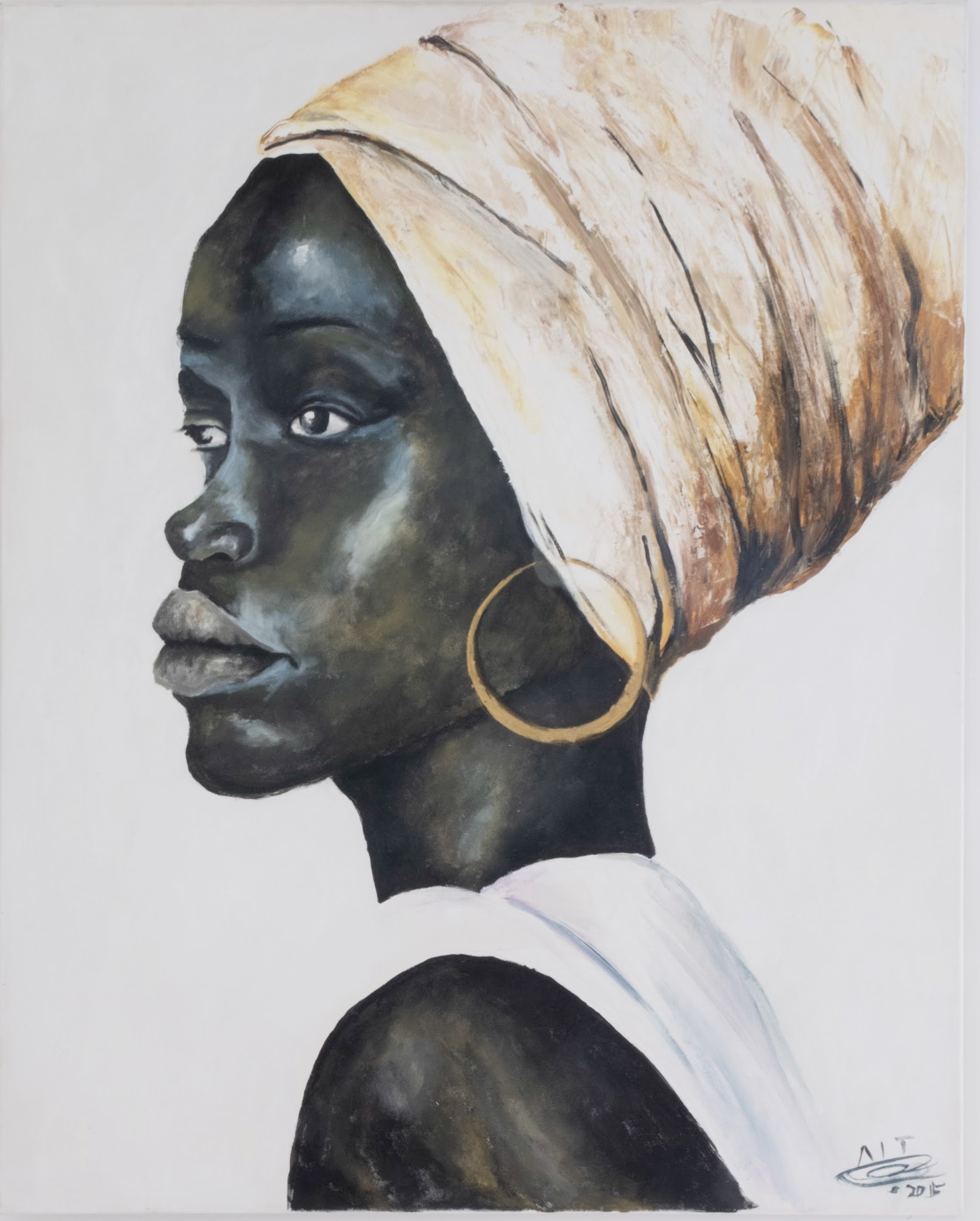
It is interesting to me that the artist chose this sitter. This portrait is not a
typical Mauritian girl. And in fact, she is not someone who would be
considered beautiful there. It may be aspirational. It is proud, very Black,
she looks in fact regal and not mixed at all. It starts the conversation for a
Mauritian audience, “What is beautiful?”
Untitled, 2013
acrylic on canvas
24 x 20 in.,
Unique Work: Yes
Signature: YES
Acquisition: Gallery Maguerite
Includes NO
Appraisal: NO
ANDREA DEL RIO, 1984
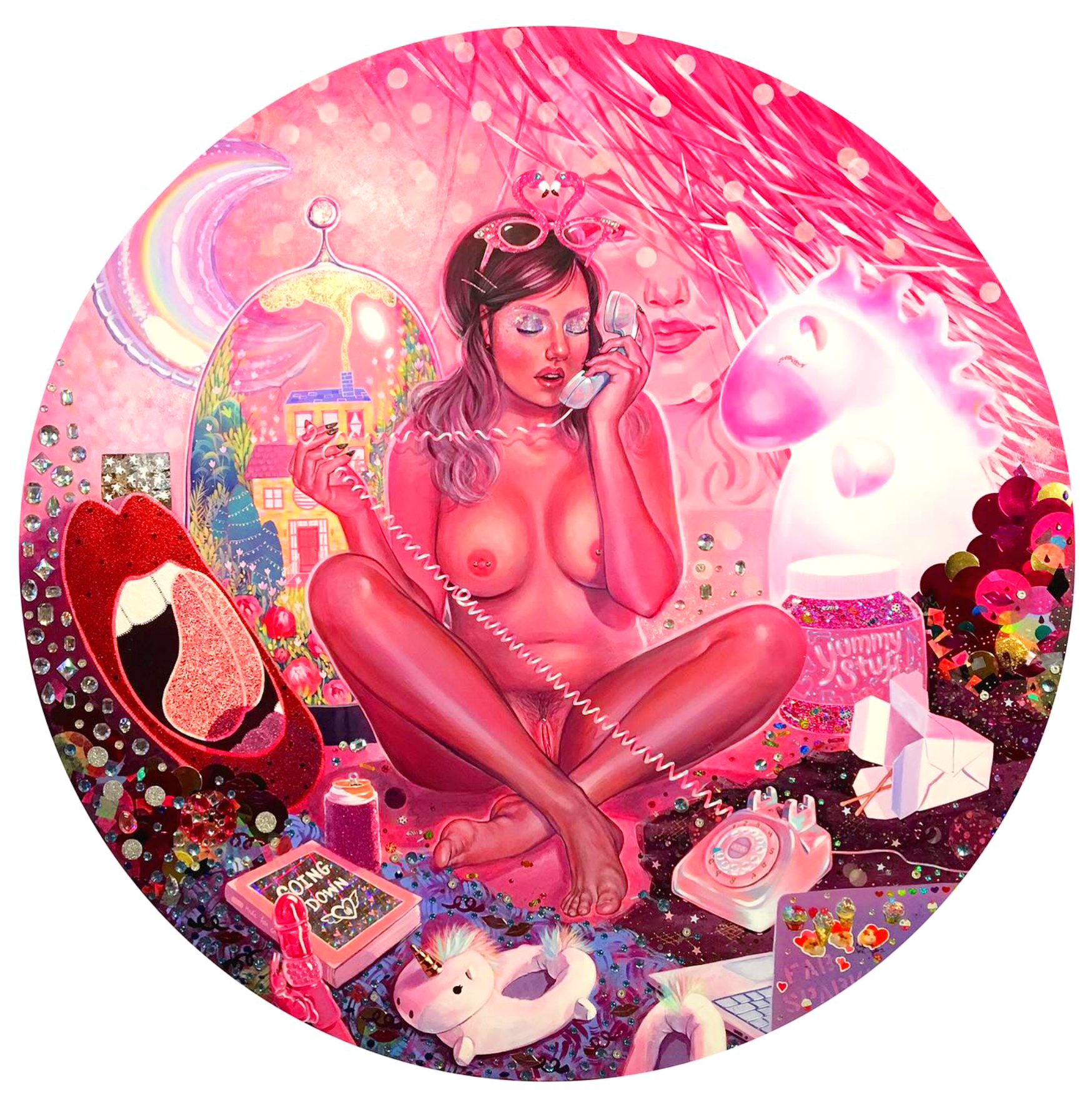
Que Quieres, (What do you want?)
Mixed Media on Wood Panel
48 × 48 inches
Unique Work: yes
Signature: yes
Acquisition: Playground Detroit, 2025
Includes a Certificate of Authenticity
Appraisal: NO
This piece was a fight. We spent hours, quite literally, discussing this piece.
Qasim wants to run a Muslim home. I really feel like the purpose of art is to make us think, to make us uncomfortable, to ask questions.
loved this piece, while a little outside of our narrative, for two reasons.
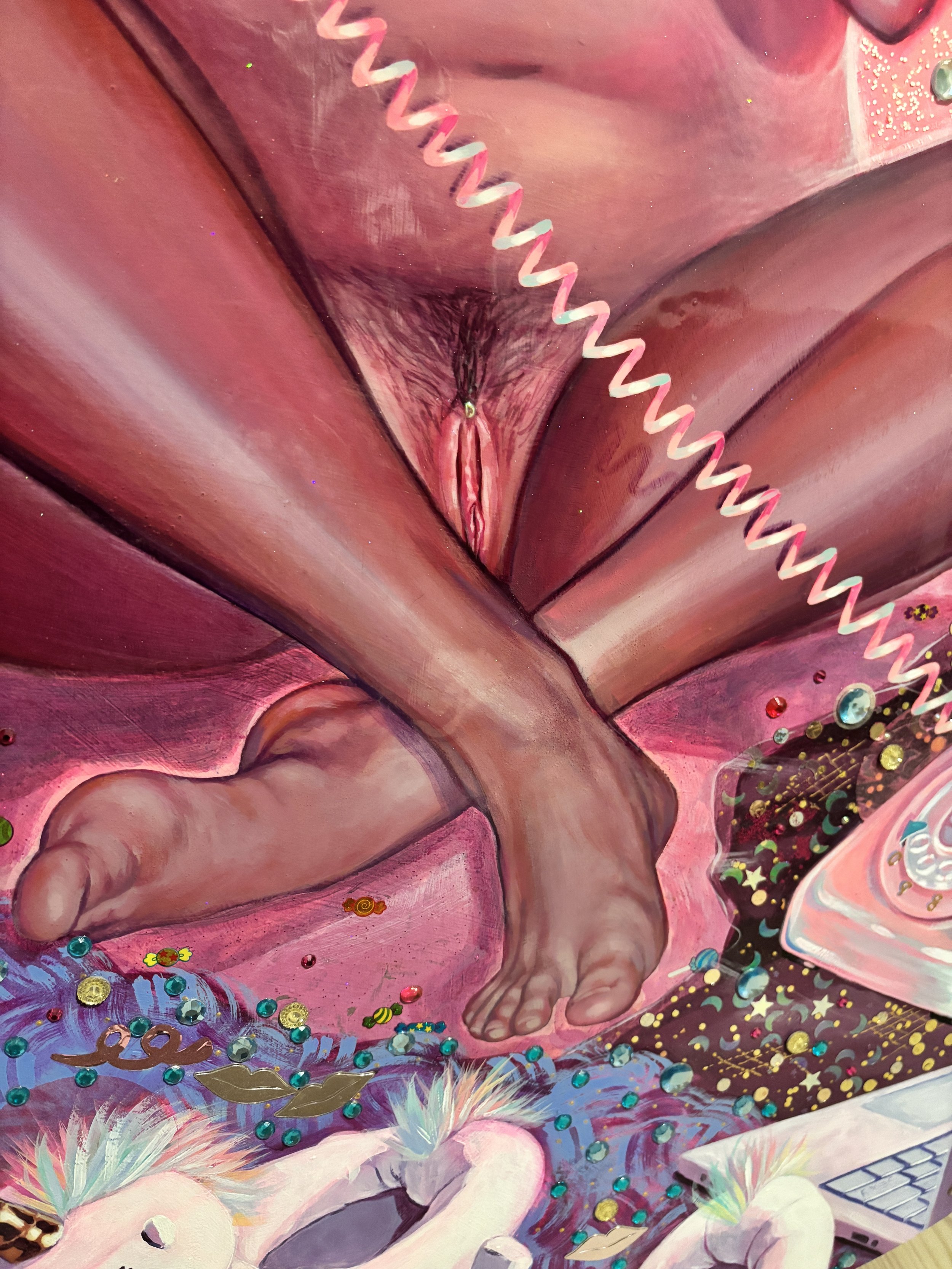
I think a lot of Black and brown women from my generation who grew up with white barbie have this very specific sense of what it means to be a white girl. It’s fantasy, its candy coated, it’s saccharine and too, too perfect and it’s both offensive and incredible alluring. You want the candy…and the smoke.
And because of its absolute and total rejection of the male gaze. Her unself consciousness, her utter containment and contentment, her total unwillingness to include you in her inner world challenges and in fact, negates, the male gaze.
Yes, you can look, but in many ways, you can’t really impact because while you may be acting out your fantasies on her, she has no acknowledgement of you, your gaze has no meaning. This speaks to the impervious nature of the white experience to me and is also challenging something that persists in the art world: fine and otherwise…men are the audience. However, here no one cares.
Andrea is Peruvian and carries into her practice a love for color. Within her work, imagery emerges through a process of discovery, a quilted pattern of integrated environments. This act of uncovering mirrors the way internal worlds are formed through life experiences, assumptions, memories, fears, fantasies, solitude and desire.
Qasim admires this work and respects Andrea’s craft and at the same time, is concerned every time he has someone in the home about what they may feel about him as a man. I am deeply grateful that he trusts and loves me enough to have agreed.
So, in some ways, unironically, this piece is a love letter, from Qasim to this brown girl.
~
Andrea is a graduate of the College for Creative Studies in Detroit and an educator at the Detroit Institute of Arts. She has exhibited with Playground Detroit, Detroit Shipping Company Gallery and the Detroit Artists Market“My friendships, experiences, and emotional states are my favorite things to immortalize with paint. Joy isn’t taken as seriously in our everyday lives, and I hope to share it with all who take a moment and imagine themselves in my works of art. My specialty is trying my best in the world we live in. Themes and subject matter are ever-evolving, and that’s ok because I never want to invent boundaries for my art. I’m most known for the glittering, shiny, and showy, mostly pink portraits and landscapes. I feel a calling to create feminine, ethereal, fantastical, and delicate works.”
JOEY QUINONES, 1972
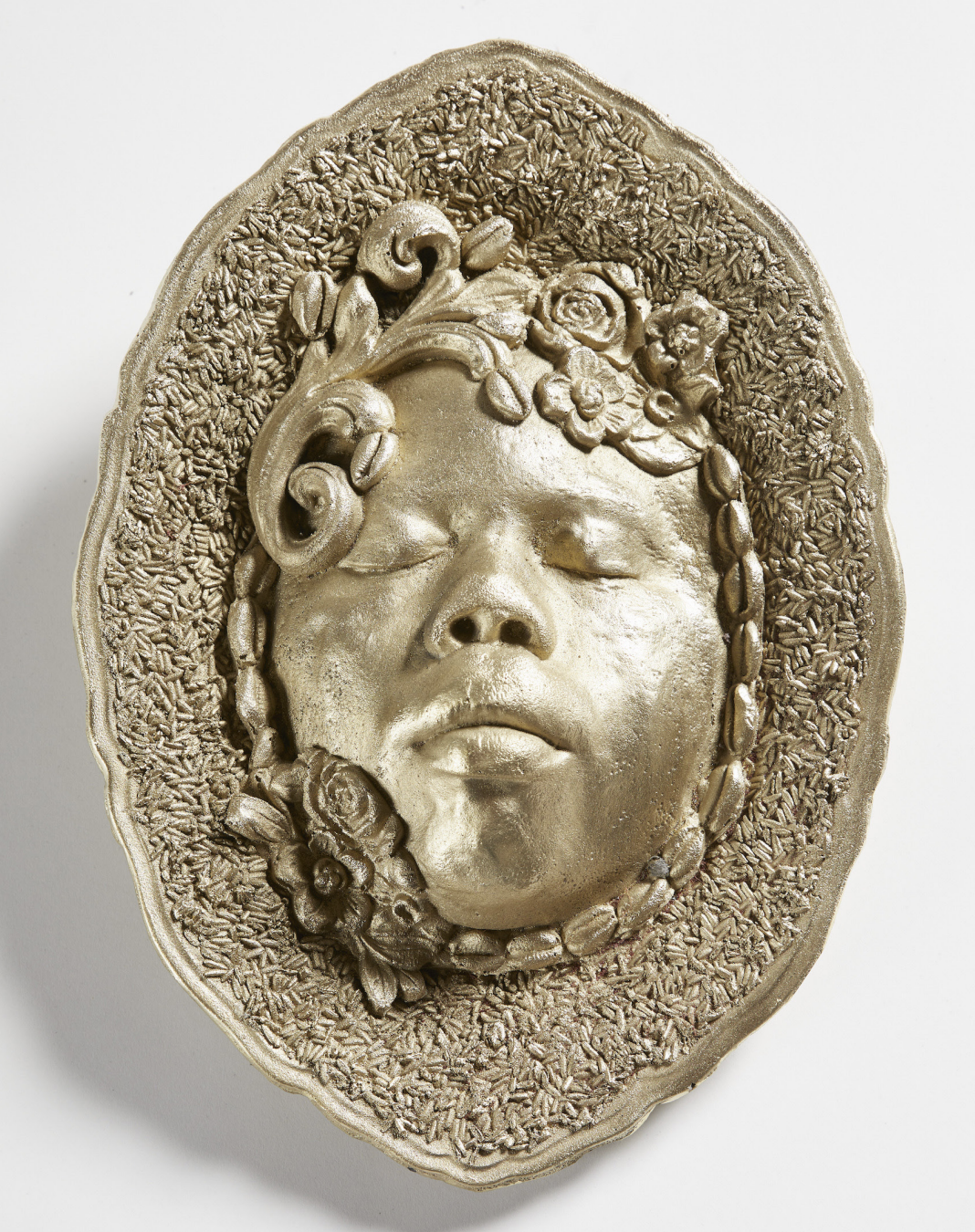
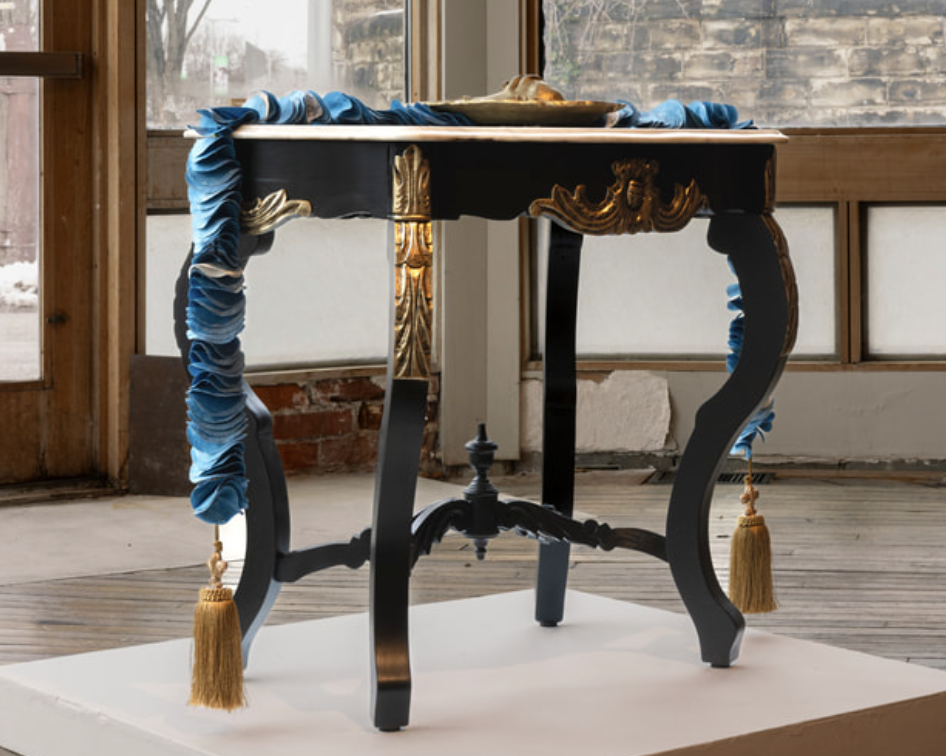
Carolina Gold, 2022
Brass, indigo, beads
12” x 9” x 3”
Unique work: Yes
Signature: on verso
Acquisition: Studio of the Artist
Includes: Certificate of Authenticity
Appraisal: NO
Joey Quiñones is a fiber artist, ceramicist, and mixed media sculptor. Their work focuses on queer, Afro-Puerto Rican heritage.
Joey was selected as an Augusta Savage Grant recipient by the National Sculpture Society. Their work has been shown nationally and internationally at the Palais de Tokyo, Manifest Gallery, the Akron Art Museum, the Crocker Museum, the Shepherd, the Elaine L. Jacob Gallery, the Winterthur Museum, and The Sculpture Center. They have an MFA in Studio Art from Indiana University, Bloomington, and a Ph.D. in English from the University of Iowa. They have had residencies at Vermont Studio Center, the Winterthur Museum, Garden, and Library, and the Arts/Industry residency in Foundry at the John Michael Kohler Arts Center. They are currently the Artist-in-Residence/Head of the Fiber Department at Cranbrook Academy of Art in Bloomfield Hills, Michigan.
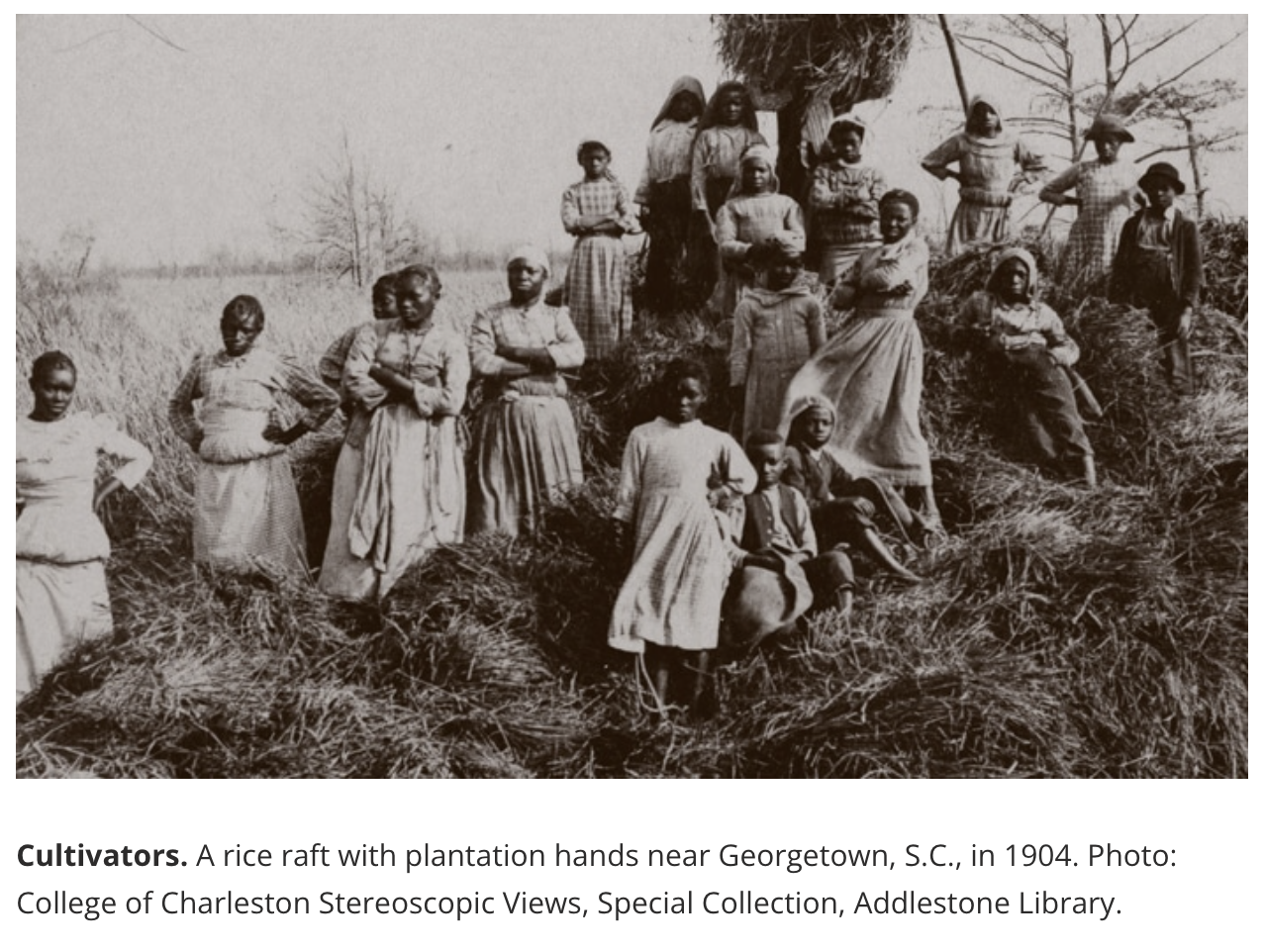
We came to hear of Joey through the contingent who travelled from Detroit to Paris for the Paris Salon in 2025.We met with them at Cranbrook and had the honor of sitting in their studio and learning about their story, their work. This particular piece was done during Joey’s Kohler residency and is a bust that pays homage to skilled rice growers from West Africa and their fallen people enslaved in the in Carolina’s Low Country.
3.5 million of the 5 million bushels of rice produced in the United States were Carolina Gold . Rice plantations shaped and reshaped low country geography and it’s economy, making the cities there the richest in the world, but wealth built on the backs and deaths of slaves. With rough tools, it was these black enslaved peoples who cleared immense wooded swamps and constructed massive hydrological systems—dams, dikes, and floodgates used to irrigate rice fields where they sowed and weeded the grain.
From the crucible of slavery, low country blacks and their descendants, known as the Gullah Geechee people, fashioned a unique creole culture, a blend of African and European influences. They created the only English-based creole language in North America and a distinctive cuisine based on rice.
When you see generational wealth in Raleigh or Charlotte and wonder where it began, this is part of the answer. Beneath the mist of the Lowcountry, where alligators float and cottonmouths sink, there are countless people who lie in watery graves without names or headstones.
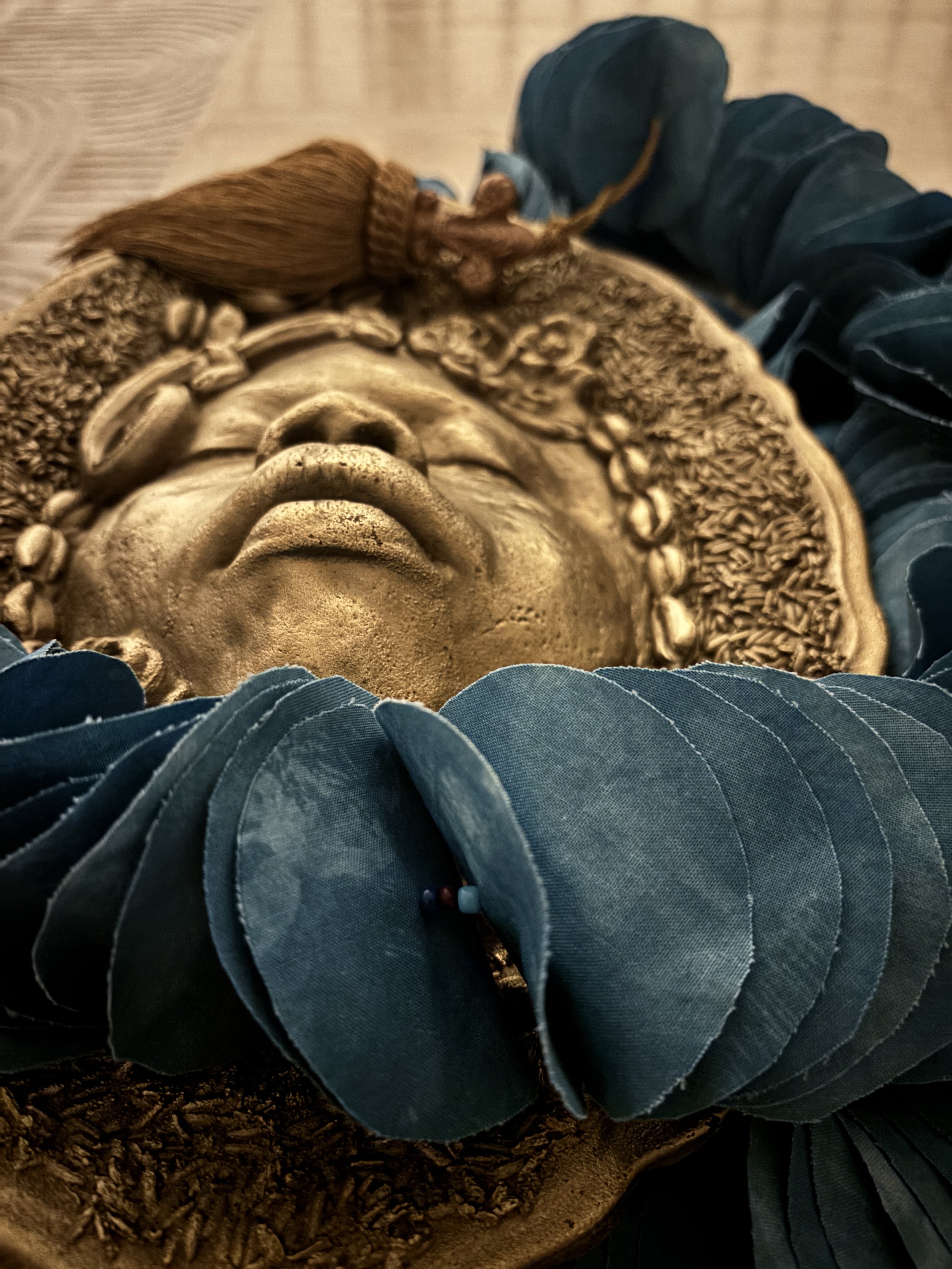
During their residency at Kohler, Joey memorialized one of their sisters. They gilded the face and created a kind of death mask, echoing ancient Egyptian traditions meant to protect the dead, help the spirit recognize its body, and allow the soul to see, eat, and breathe in the afterlife.
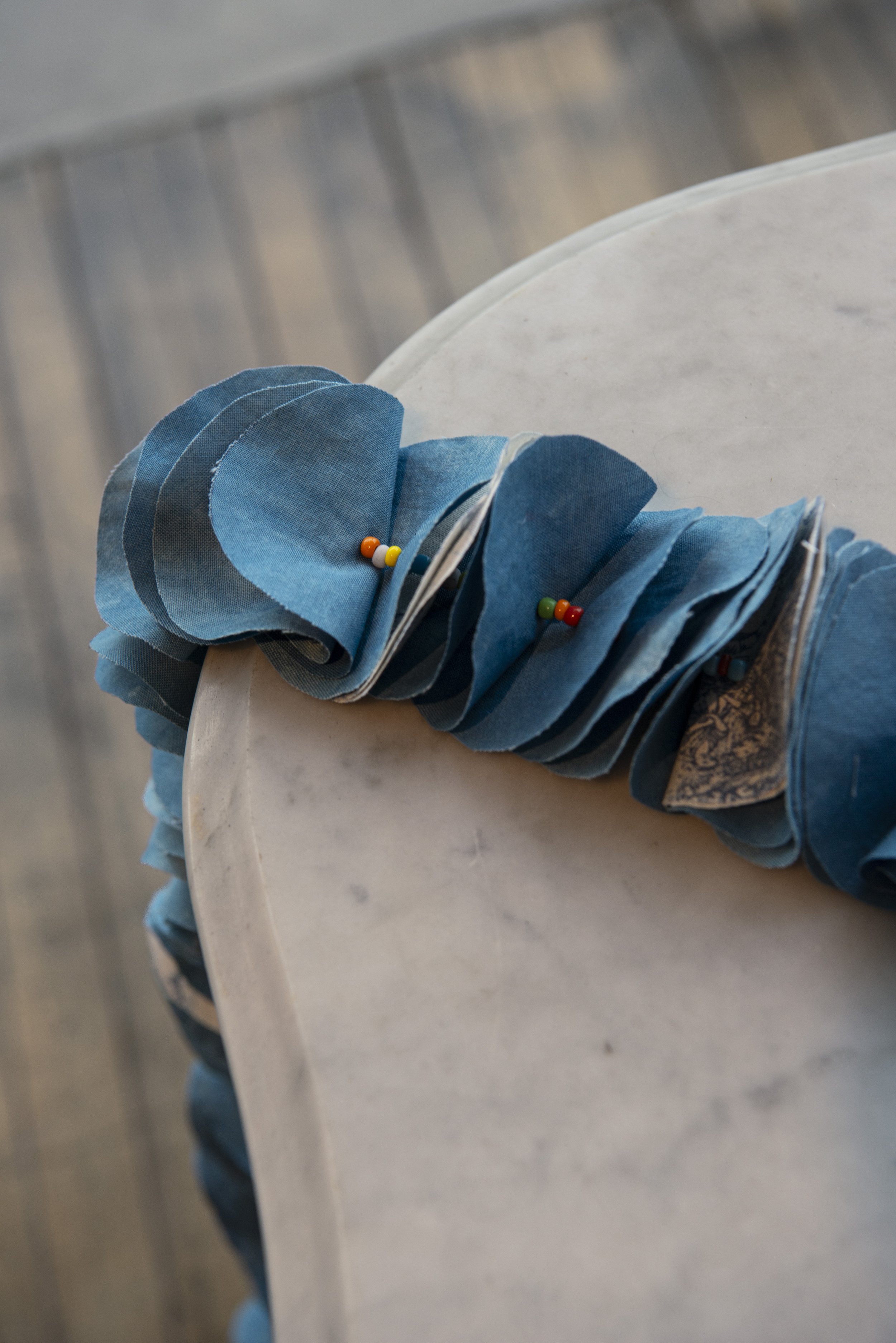
Indigo took just as many lives. Native to South Asia, the plant produced the blue dye prized throughout Europe, but its processing was toxic and often lethal. Joey cultivated and processed indigo by hand, transforming the plant into dye and then into a funerary wreath for an imagined Gullah Geechee ancestor.
The wreath frames the face—mourning the unnamed and restoring dignity. The mask is startling and beautiful. It disrupts how inured we can become to the ways in which we have been unable to honor those who came before us.
~
Joey has their MFA in Studio Art from Indiana University. Their career as an artist is only 5 years old and yet they have already had a museum exhibition and was part of a juried salon that traveled to Paris at the inaugural Art Basel. They are the Artist-in-Residence/ Head of Fiber Department at Cranbrook Academy of Art.
Antoine de Villiers (b. 1977)
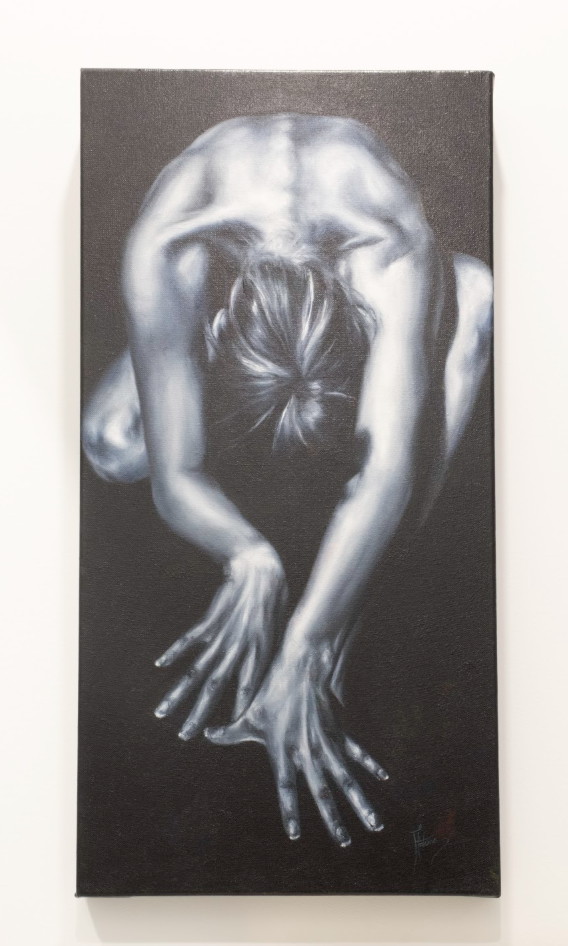
Submission, 2003
Oil on Linen
22” x 18'“
Unique work: Yes
Signature: YES
Acquisition: Studio of the Artist
Includes: Certificate of Authenticity
Appraisal: NO
Antoine’s approach is visceral. She writes of her own work, “I explore the emotional complexities of the human subject through the lens of my personal experiences. I paint honestly without armor or protective covering.
Being in an inter-religious marriage has been a greater challenge than I expected. Qasim was raised Muslim by his paternal grandparents. I was not. We still haven’t figured it out fully, but I do love Islam. My maternal grandfather was a devout Muslim; my mother was raised Muslim. I love the fact that the word Islam means “Submission”. In that all of us, whether we feel connected to God or not, are in submission to nature and therefore, to a Higher Power.
I bought this piece as a literal interpretation of both what it felt to fall in love with my husband and to be in submission to something greater than myself.
~
Antoine is self-taught. She has been featured in over sixty exhibitions in the UK, US and India. She hosts an art camp for the children of India’s underworld, from the brothels of Old Delhi to Maharashtra’s slums.
Darin Darby (b. 1972)
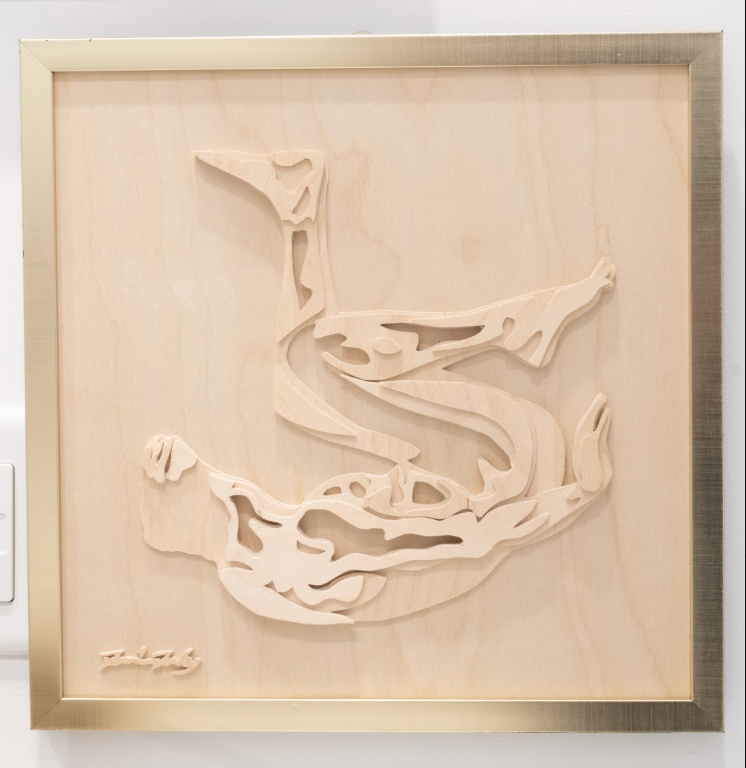
Darin is a Detroit multimedia artist who spearheaded a technique of layering wood, card stock paper, mat board, leather, like puzzle pieces, a technique he calls, Laypuzzim, to create sculptural work that uses negative space and melodic patterns to elicit emotion.
This piece, for me, describes my experience of falling in love with Sheba, tumbling, turning, falling, here, there and everywhere. It also describes the dynamism of my identity.
As a married man, I experience a deconstruction and reconstruction, constant movement, activity, or progress. I choose to educate myself, harvest my gifts, renounce the parts of myself that don’t serve me or the world, and remake myself again. This process is both lifesaving and inherently disorienting.
Not being Black enough, not being Pakistani enough, not being American, but of course, being American…the making and remaking of myself, remembering what had been forgotten, holding onto what had been seeded in me from generations before…this is what this piece means to me.
~
Darin is self-taught and has participated in over 100 exhibitions throughout the Midwest. He has won multiple awards including People’s Choice at the National Afro-American Art Museum in Ohio and Curator’s Choice at the Muskegon Art Museum. He has work in public collections at Henry Ford Hospital in Jackson, MI, the Dayton Art Institute, and the Detroit Historical Museum, to name a few.
In 1942, Vietnamese rice workers and farmers suffered under the brutal occupation of both French colonialists and the Imperial Japanese Army. Rural people were forced to shift from rice to industrial goods like jute for uniforms. Those that were allowed to grow rice were forced to give it to the Japanese troops. This plunged farming communities into economic hardship, laying the groundwork for a devastating famine.
According to the Viet
Minh, 2 million Vietnamese people starved to death in the Red River Delta of northern Vietnam during this time.
We found this piece on a road trip, shoved against a dank wall in the back of an antique thrift store and luckily it was stamped on the back, signed and had provenance.
We were able to trace it back to a nun at a convent in Massachusetts who had a gift to paint. Her name was Sister Peggy Bess. She had done missionary work in Vietnam during the famine.
Starvation marked my both my parent’s childhoods and when my dad would come to visit, he would make me cover this piece with a bedsheet. He never asked about the painting. He just recognized the expression on her face.
Not everything we collect is beautiful, this piece is disconcerting, but it’s important to remember, genocides exist the world over, and forced famine is one way we fuel the war machine.
~
Peggy Bess was self-taught. She never had a formal exhibition in her lifetime.
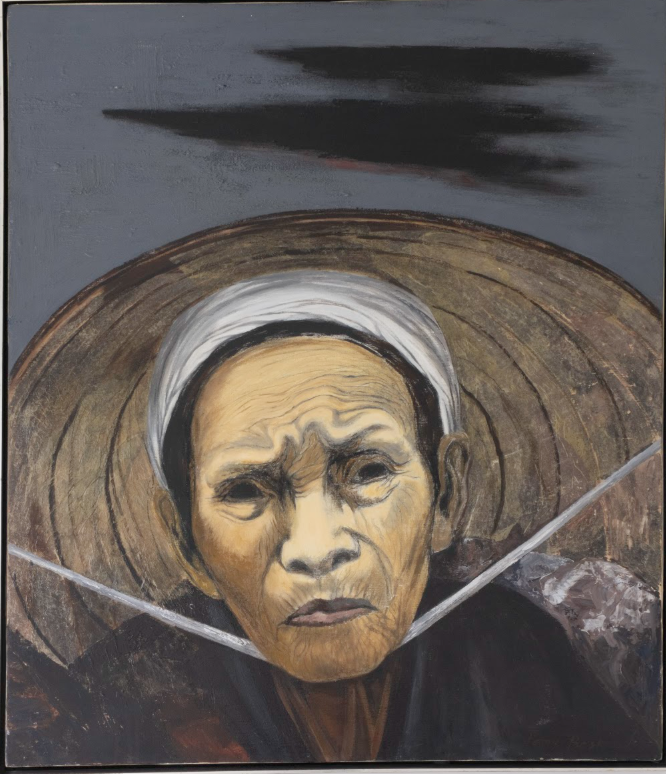
Vietnamese Rice Worker, 1943
Oil on canvas
60 × 48 inches
Unique work: Yes
Signature: on verso
Acquisition: Secondary Market
Includes: NO
Appraisal: NO
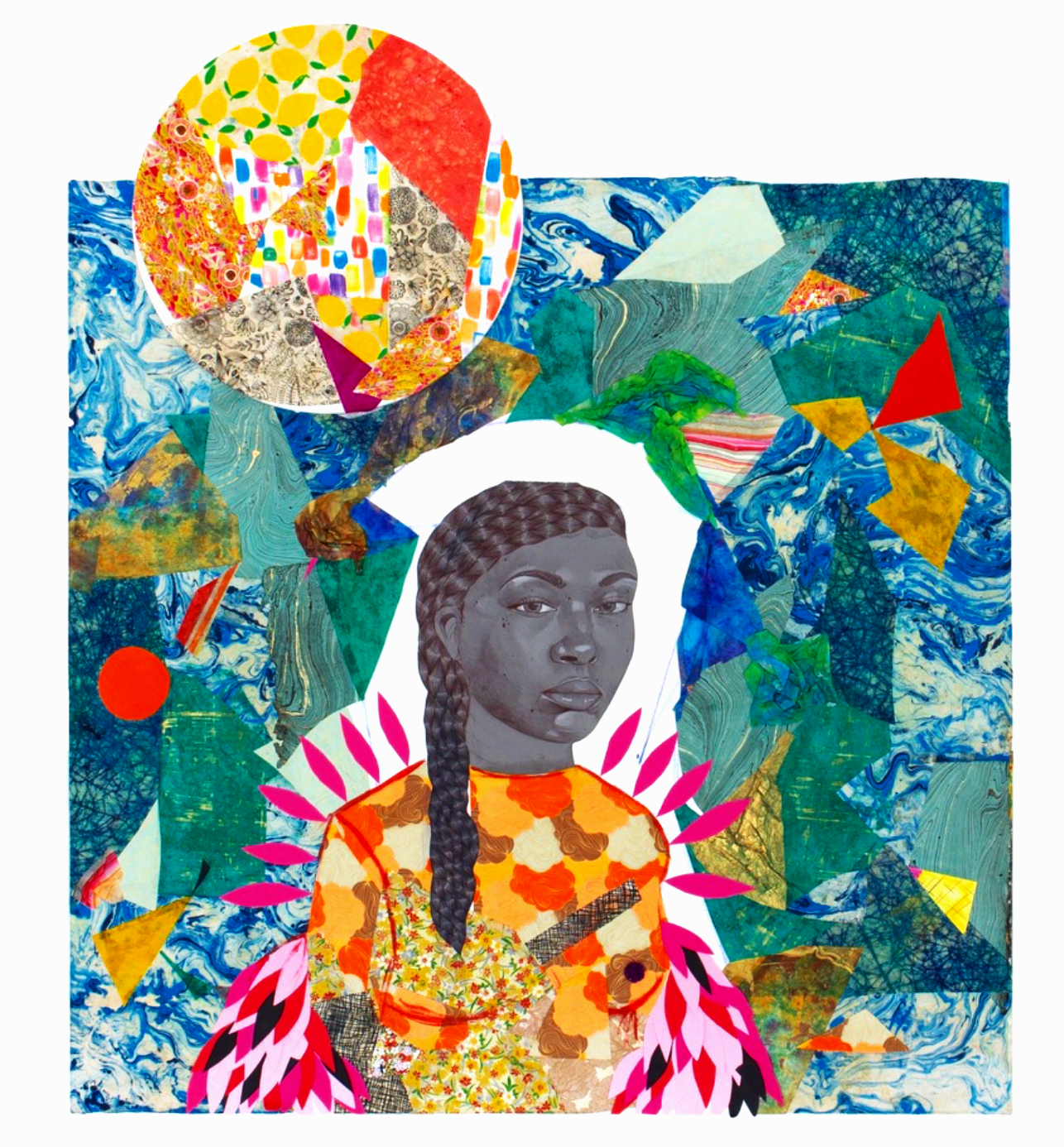
Pink Feathers and Orb, 2020
Ink, graphite, pencil, glitter, mixed media collage on canvas
54 x 48 in
Unique work: yes
Signature: yes
Acquisition: Studio of the Artist
Includes: Certificate of Authenticity
Appraisal: YES
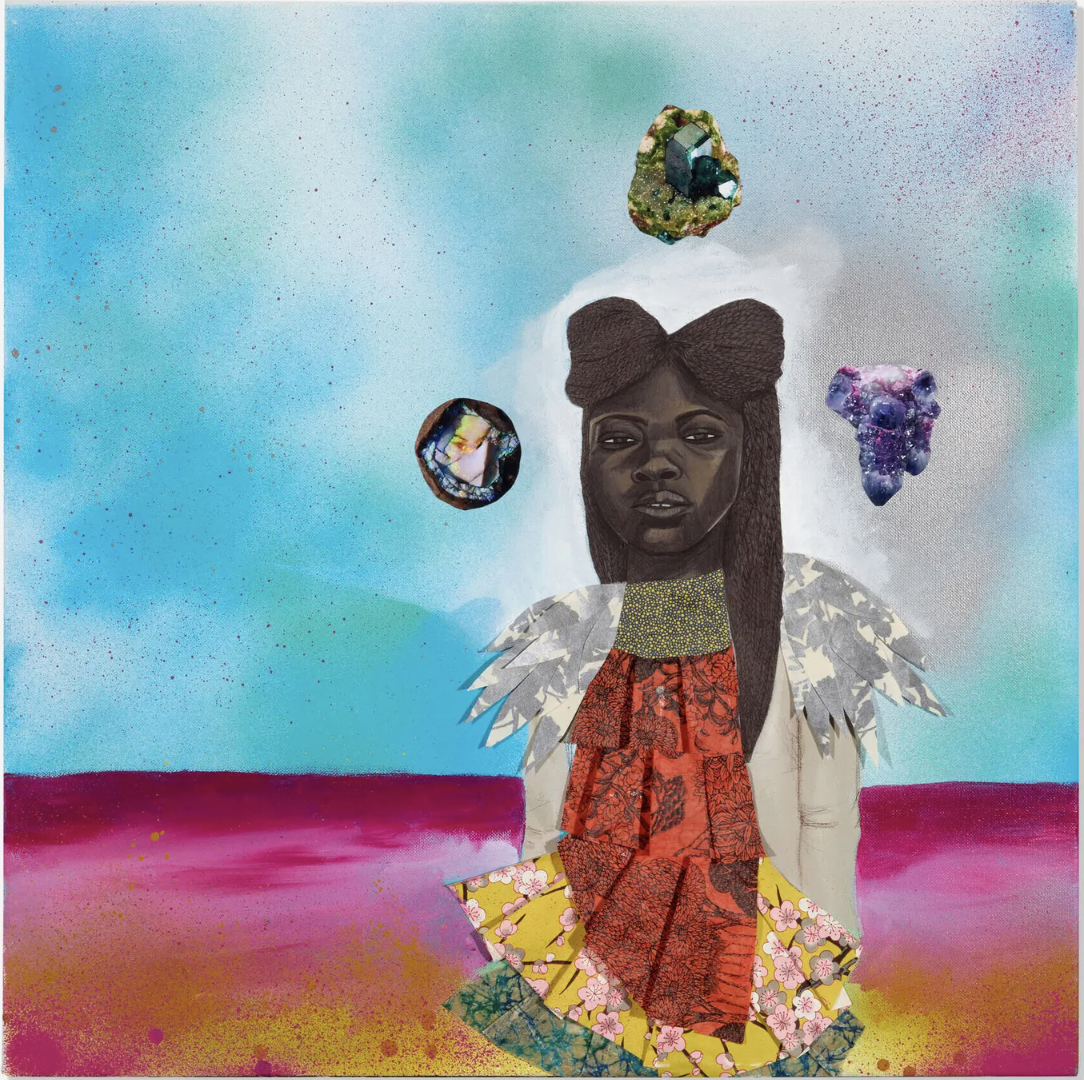
Let Them See Me, 2016
Acrylic and cut paper collage on canvas
23 7/8 × 24 in
Unique work: Yes
Signature: on verso
Acquisition: Marc Wehby/Rago & Wright Auction
Includes: Certificate of Authenticity
Appraisal: YES
JAMEA RICHMOND EDWARDS 1979
Jamea Richmond-Edwards is my girl, both a sister friend and someone I look up to. She is a dancer, a horn player, a mother, a wife and an artist...she creates large scale mixed media collages utilizing a variety of papers and hand-drawn elements. Her work is mostly Afrofuturist, exploring blackness beyond what we consider blackness. Her goal is visionary, to move outside of the confines of where and what we can be. These works were a bit older, “Let them see me” is almost 10 years old and a Princess in my mind. She is proud, young, sweet and living on Saturn, it would seem. Her hair is exquisite, her dress feels like home. When I was a small child, we would travel to my grandmother’s home in Mauritius. She would have made me 7 dresses, all with pleated skirts like my little princess above, the patterns like these, leftover primary colors…greens and blues.
Pink Feathers and Orb is a bit newer, only 6 years old and the last it seems of her grey scale. The grayscale is emotional and intimate and so very serious. Now Jamea paints herself as a warrior princess, a dragon queen, a time traveler, a Kali mother. She paints herself high yella, ligth skinned, coffee colored. But these older pieces appeal to me, they are grounded, deep and the faces asynchronous with the frenetic burst of color in the collage below.
Jamea is through and through indigenous and historically black, seeing herself as a conduit through which Spirit flows. The process of painting is organic for her, a dance in which the work comes through her, like prophecy.
“Let them See Me” is almost 10 years old and I call her a princess. She is proud, young, sweet and living on Saturn, it would seem. Her hair is exquisite, but her dress feels like home.
When I was a small child, we would travel to my grandmother’s home in Mauritius for four months of the year. My grandmother would tuck me between her legs, secure me with her fat thighs and squat before a mirror. Using a man’s comb, she would part my hair down the center, braid both sides, tie it off with a polyester colored yarn and then loop it back up.
She spent the months I wasn’t with her making me dresses. I had 7 or 8 new dresses each year, all with pleated skirts like the princess above, the patterns like these, leftover primary colors: yellow, the color of her nails when she grated turmeric; green the color of the frogs that lived in our pond. They were made of something stiff and had little pearl buttons and tiny puff sleeves, lace hems and pinafore fronts.
I felt like someone in those clothes, tucked into my grandma’s side, both of us, straight on, chin up, shoulders back, reserving judgment.
Born and raised in Detroit Michigan, Richmond-Edwards graduated with a Bachelor of Arts degree from Jackson State University in 2004 where she studied painting and drawing and went on to earn an MFA in painting from Howard University in 2012. She is a recipient of the 2019 Joan Mitchell Painters and Sculptors Award and a 2020 Joan Mitchell Artist in Residence. Jamea has exhibited her artwork nationally and internationally including the California African American Museum, Charles Wright Museum in Detroit MI and Kravets Wehby Gallery in New York. Her work is included in the collections of the Studio Museum of Harlem and Rubell Family Collection.
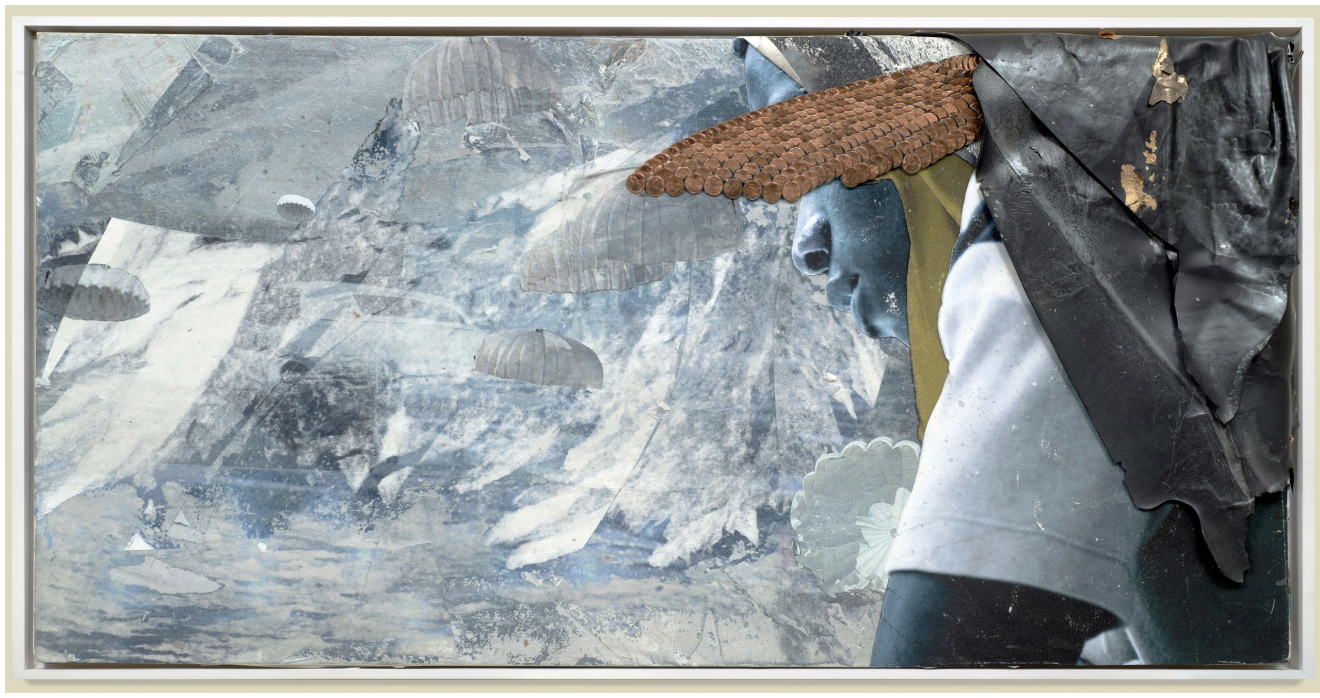
SHAUNTE GATES, 1979
Shaunte Gates, like Mia Sandhu, above has a background in film production. Like Jamea, he has a spiritual practice. It’s as if these visions come to him, waking dreams. They aren’t really prophecy, or perhaps they are, but they come across in sections like scenes from a film. He reflects on what feels like a war around us, a war against us, and often features his son as the protagonist…the hero in the film moving through killing fields, other worlds, apocalyptic dream scapes. Growing up in and around public housing projects during the “war on drugs,” Shaunte observed how the mythology people create around drugs, war, culture, blackness produce social constructs and limit our imagination. The works may be described as psycho-geographical. They focus on our psychological experiences of the city and reveal marginalized aspects of the urban environment that act as portals to limitlessness. His use of found materials brings the spiritual imprint and cultural energy to the work.
I was laying on our couch in our sitting room with my husband sleeping next to me and I heard coyotes for the first time, howling outside the window. I was bored…thinking there won’t be another art work that thrills me again, it’s impossible to see something new. And then I came across Shaunte’s exhibition with Marc Strauss. I reached out to him at 2 am…and I was shocked when he reached back. We struck up a deep and meaningful conversation and I felt I found one of my mentors. Marc and his wife, Livia, have a beautiful and intense marriage and together have discovered artists like Jeffrey Gibson. This article is fantastic for learning how to collect and how to look at art: http://flattmag.com/features/strauss-collection-love-story/
Anyways, I was deeply honored to be in conversation with Marc but was even more impressed by Marc’s tight commitment to pricing Shaunte to show him and grow him rather than over inflate him for the gloss and the hype and then let him fail. Shaunte’s work deserves to be recognized, he is in a long line of black artists moving the field of fabric, collage and found objects forward.
Memnon’s Dilemma, 2026
Acrylic paint, photo, pulled paper, collage,
pennies, thread, on wood panel
Framed 26 x 50 in
Unique work: Yes
Signature: on verso
Acquisition: Marc Strauss Gallery, NY
Includes: Certificate of Authenticity
Appraisal: YES
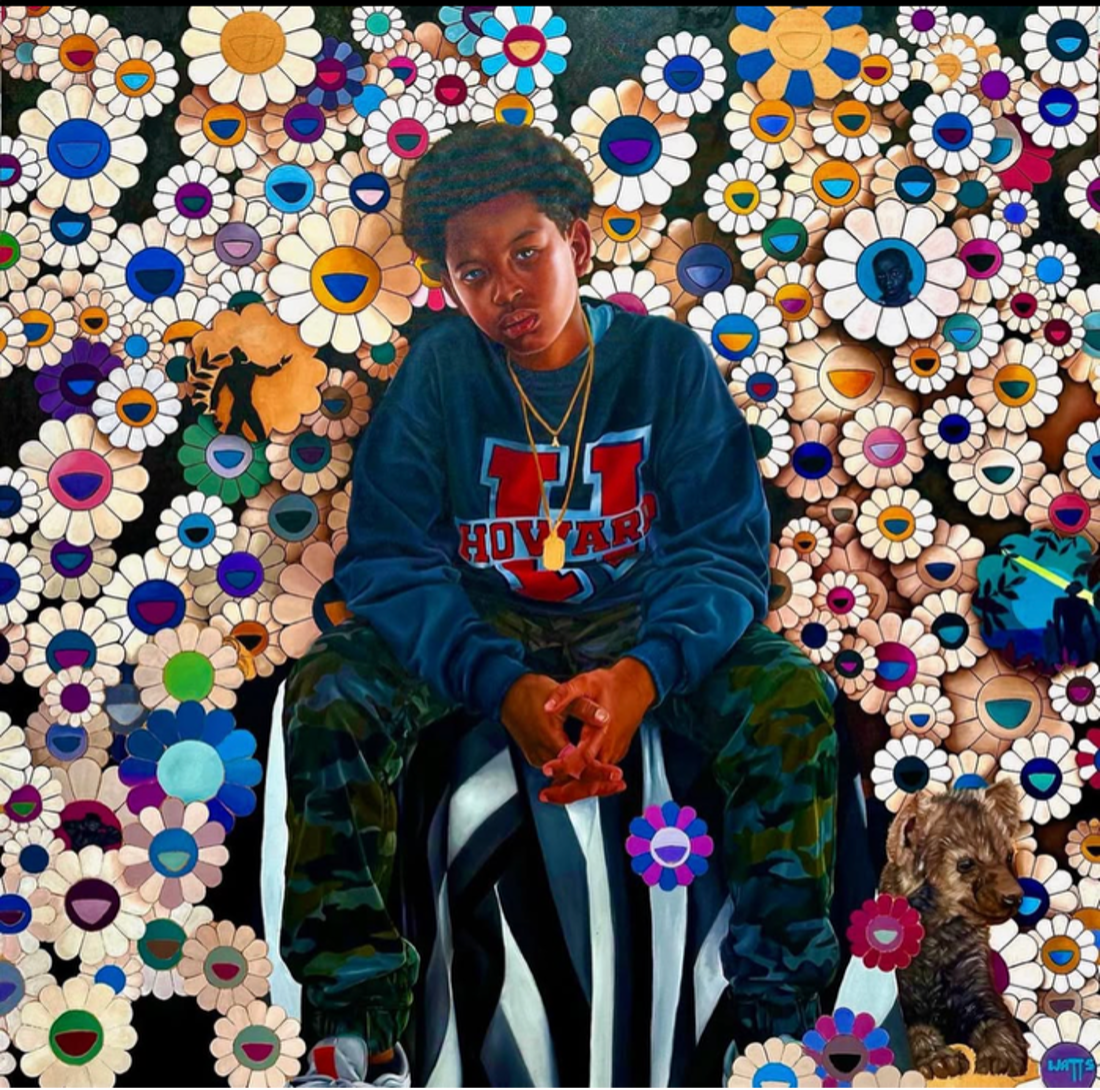
FLOYD STRICKLAND 1992
Floyd is not formally trained. He spent most of his life working in construction, often renovating elementary schools, where he noticed a troubling lack of confidence among many Black and brown children. Having grown up in income restricted housing in Watts, Los Angeles, he saw himself in their unsure faces.
He realized a his natural gift for painting and began creating large-scale figurative works inspired by the beauty, strength, and unrealized potential of children to mirror back to them what he wants them to see in themselves.
Floyd is prolific, sometimes completing a painting each week and selling one to four works a month within the affordable art market. His practice is built on a humble, focused, steady grind—one that has allowed him to avoid some of the art world’s more predatory systems. Driven by a deep, quiet love for his family, he is uninterested in the flex. He remains respectful, disciplined, and committed to his lane: joyful, hopeful, color-rich paintings of children.
Scale matters to Floyd. To magnify his people is, for him, an act of reverence and love.
This work comes from his series Higher Learning, which encourages young people to imagine themselves at historically Black colleges and universities. He dresses them in university apparel and presents them not as children dreaming of college, but as matriculated students with a sense of belonging.
Floyd continues the tradition of reframing the Black experience. That his work is widely collected by schools is especially powerful. The paintings return to the spaces that first inspired them. He states, “Completing the public art project at the Jacqueline Avant Children’s & Family Center in my old neighborhood honored the community that raised me and included generations of local families, including my own. Knowing that work will be there for years after my grandchildren have come and gone is probably my greatest achievement in life.”
~
Floyd is self taught, is being shown by galleries on the East and West Coast, including a recent group with Tanya Weddemire in Brooklyn, NY that included Detroit’s own Joshua Rainer.
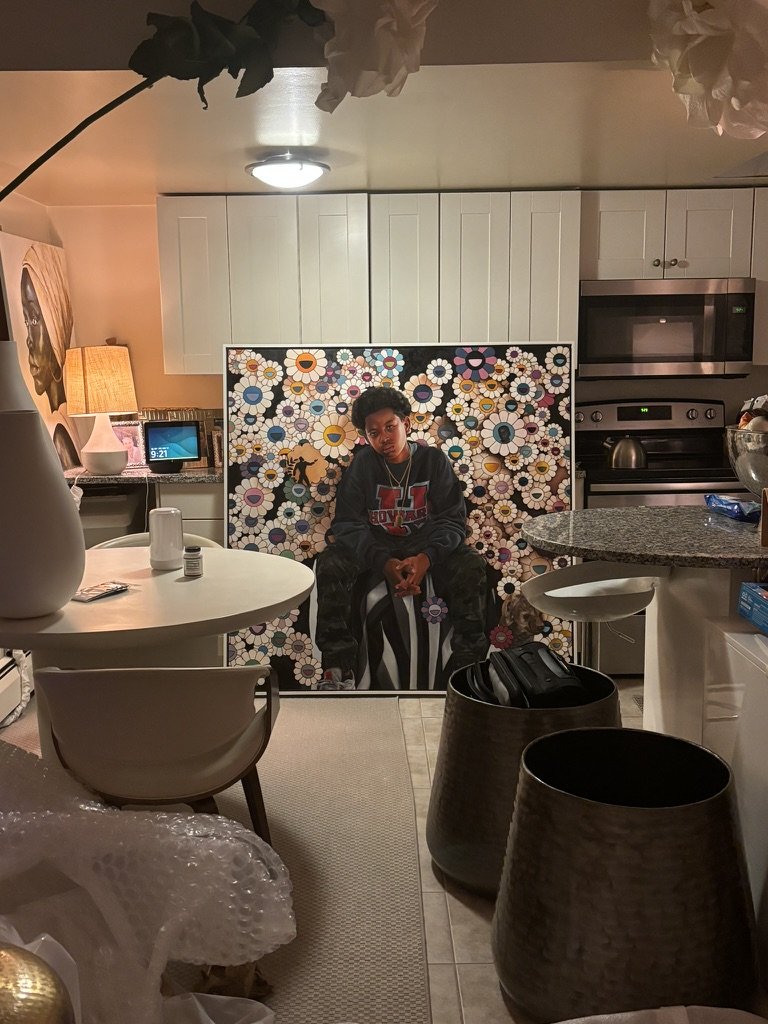
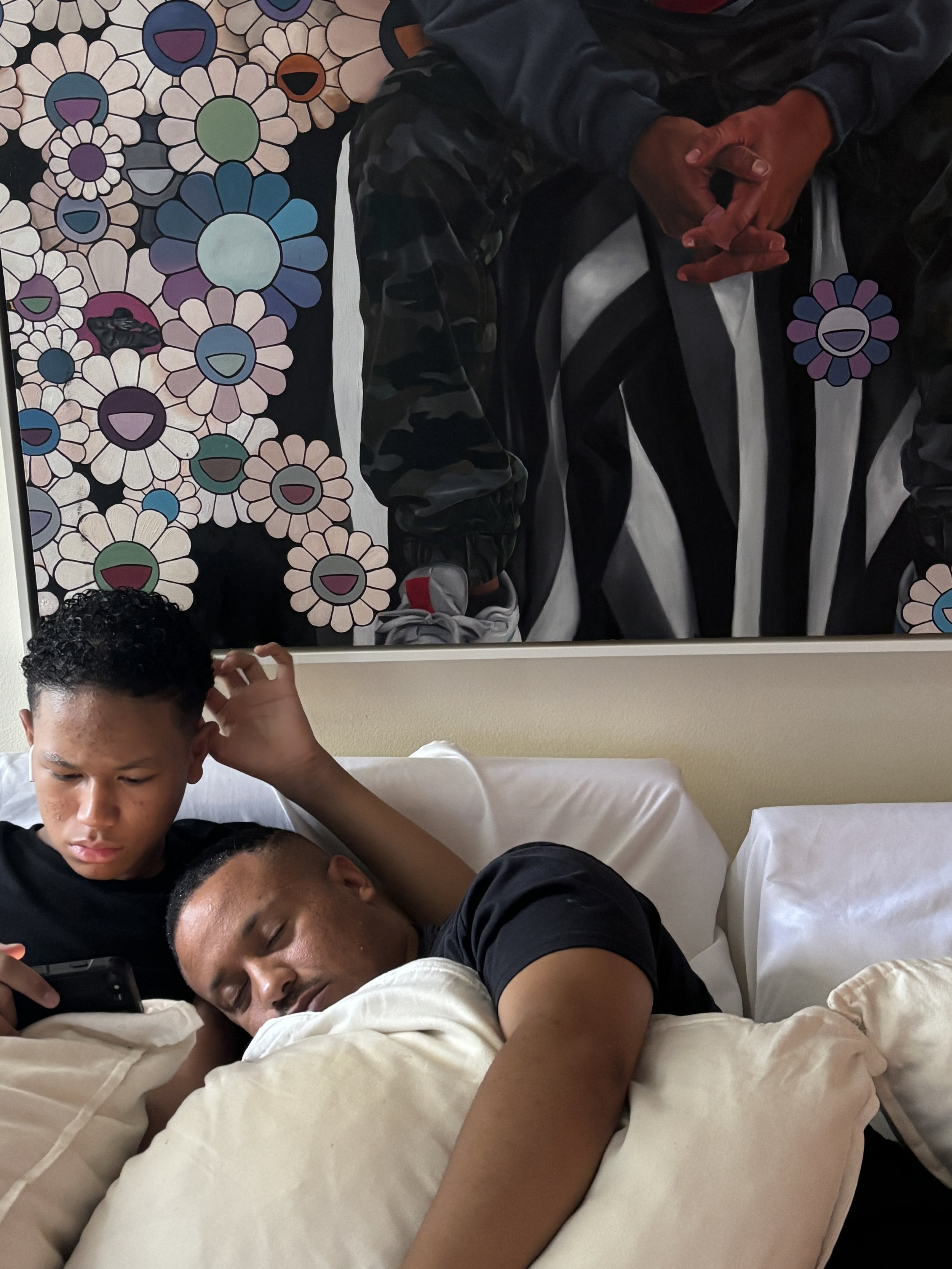
The World is Yours, 2023
Oil On Linen
60 × 60 in
Unique Work: Signature:
Acquisition: Art in Space, Los Angeles
Includes a Certificate of Authenticity
Appraisal: YES
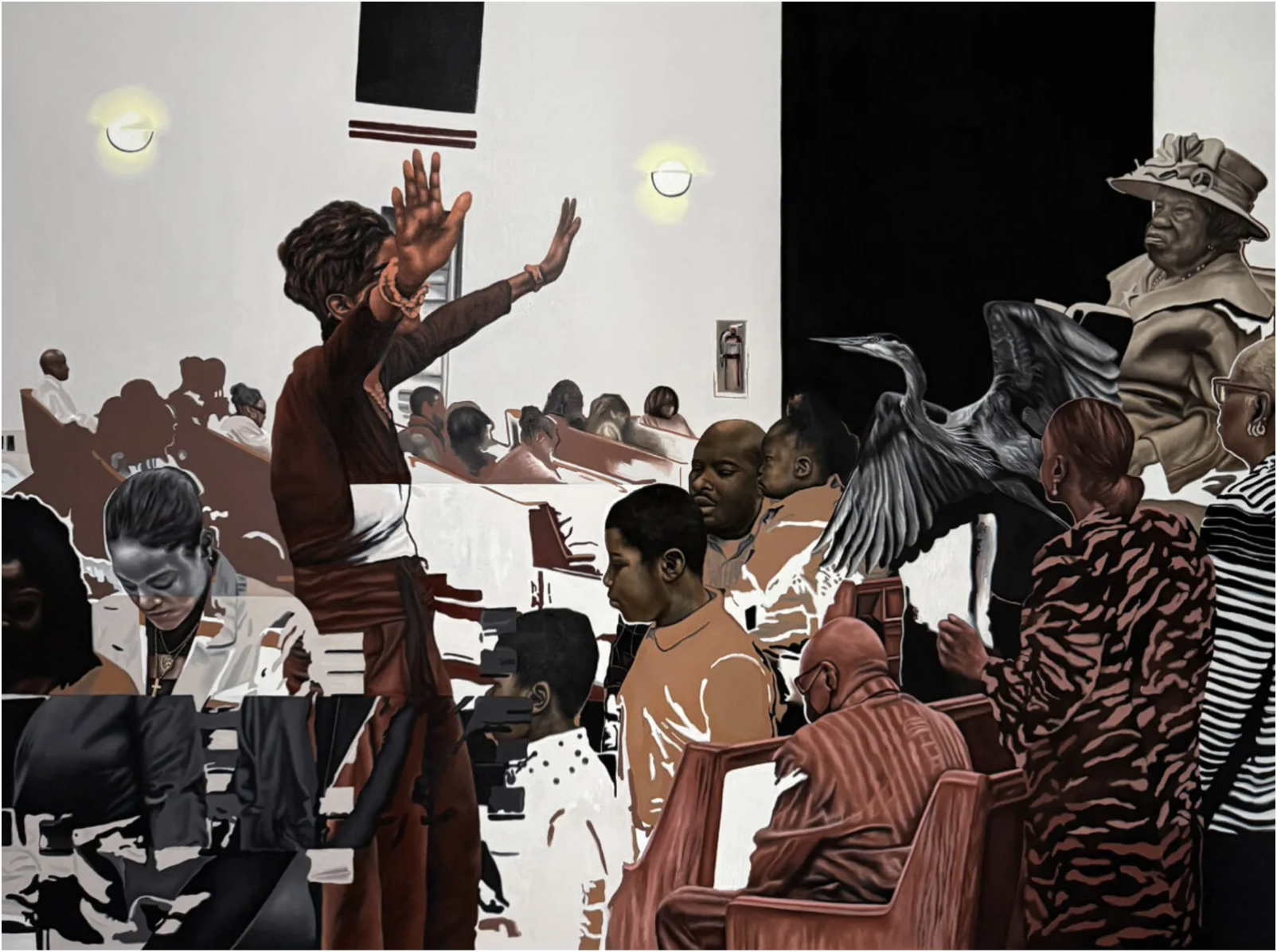
In Case of Emergency, 2024
Oil on Canvas
72 × 90 in | 182.9 × 228.6 cm
Unique Work:
Signature: YES on verso
Acquisition: Tanya Weddemire in Brooklyn, NY
Includes a Certificate of Authenticity
Appraisal: YES
O’NEIL SCOTT, 1982
This was the first major piece Sheba and I collected as a couple. It was the jewel in his solo exhibition at the Zillman Art Museum in Maine. The series titled, A Journey to Distant Memories, was inspired by locations and events experienced during O’Neil’s youth in Jamaica.
The paintings are filtered through the disjointed lens of time and memory, they further and explore the concept of disrupted realism, a glitch in the matrix as though you are seeing past and future all at once. Integral to his practice is knowing when to stop. The pieces all have a sense of being not quite finished, to lend themselves to the transience of memory itself.
The idea of the self is never static. It’s an organic collage of lived experience scaffolded on fragmented memories. These memories when attached to place, smell, taste, touch, emotion become crystallized as part of how we conceptualize the self. O’Neil posits through his practice that accuracy is not as important as sensation. More than painting what he remembers, he paints what he feels.
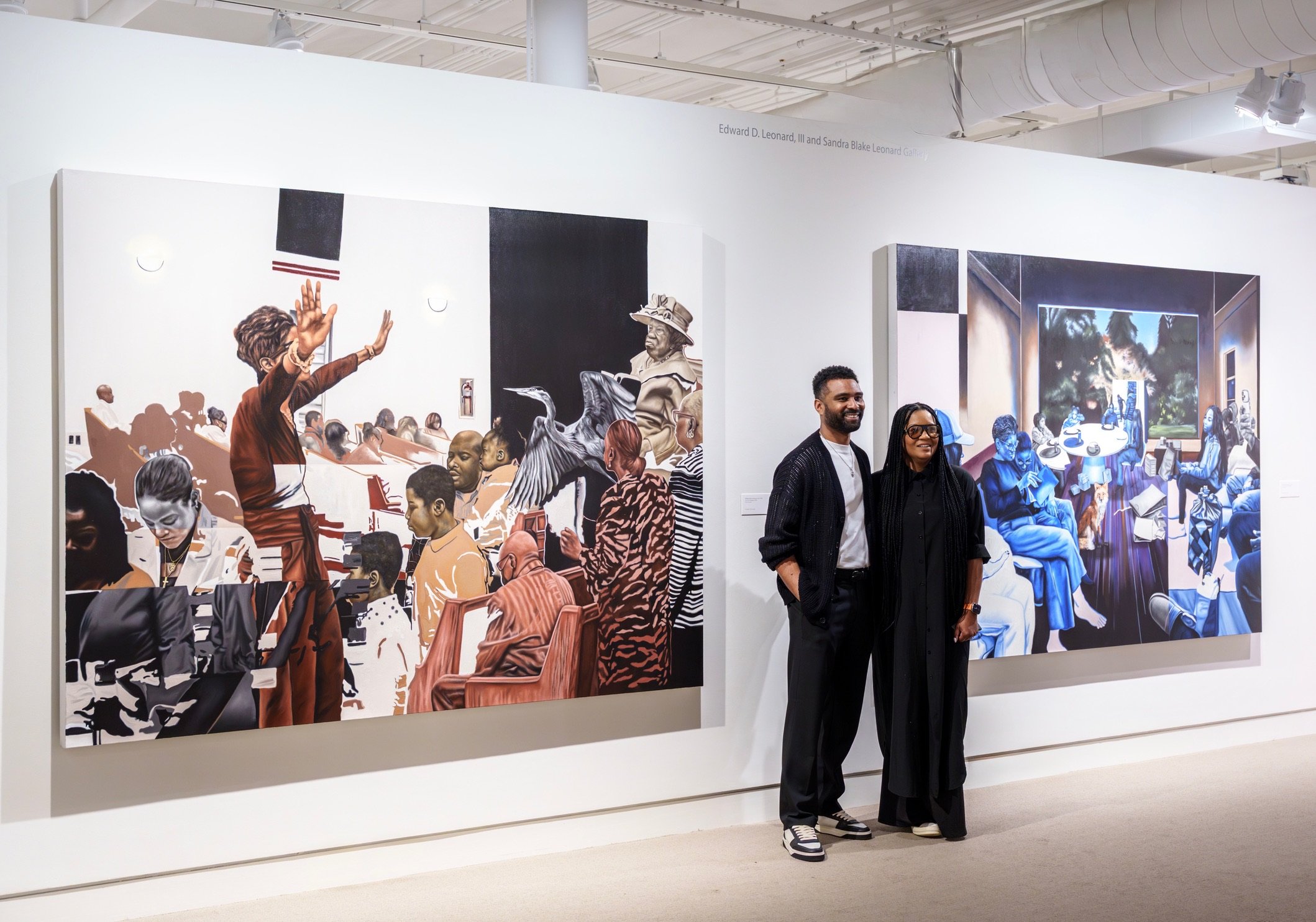
In Case of Emergency articulates the support O’Neil found within the walls of the Black church. Central to the work is an image of a blue heron. As he painted, he prayed and the bird landed in the water in front him. He incorporated what he saw as embodying the spirit of God.
O’Neil described this piece to Sheba as a way of honoring his community. “The church had a free after-school program, I would go there. They took care of us like I was family.” But to us this piece speaks to a moment in time, this moment in time. We are in a state of emergency. Everyone in that church is someone I know, someone you know. Look closely, the window is high up, this is a church basement. Look closely, there is only a fire extinguisher in the background. Look closely, it is night and the window is closed. The light is from the room, not the sky.
The piece chills and comforts us all at once. It speaks to the deepest feelings we have about this moment in time.
~
Although exposed to art curriculum, O’Neil is not classically trained. His work has been featured in at least 20 exhibitions including at the National Gallery of Jamaica. His work is collected by Villanova University, the Windgate Museum of Art and Petrucci Foundation.. He just concluded his solo exhibition at the Zillman Art Museum in Maine. O’Neil is represented by Tanya Weddemire in Brooklyn, New York.
FAHAMU PECOU 1972
Rising, 2014
acrylic on canvas
84 x 48 x 2 in (213.36 x 121.92 x 5.08 cm)
Unique Work: YES
Signature: YES on verso
Acquisition: Lyons Wier New York
Includes a Certificate of Authenticity
Appraisal: YES
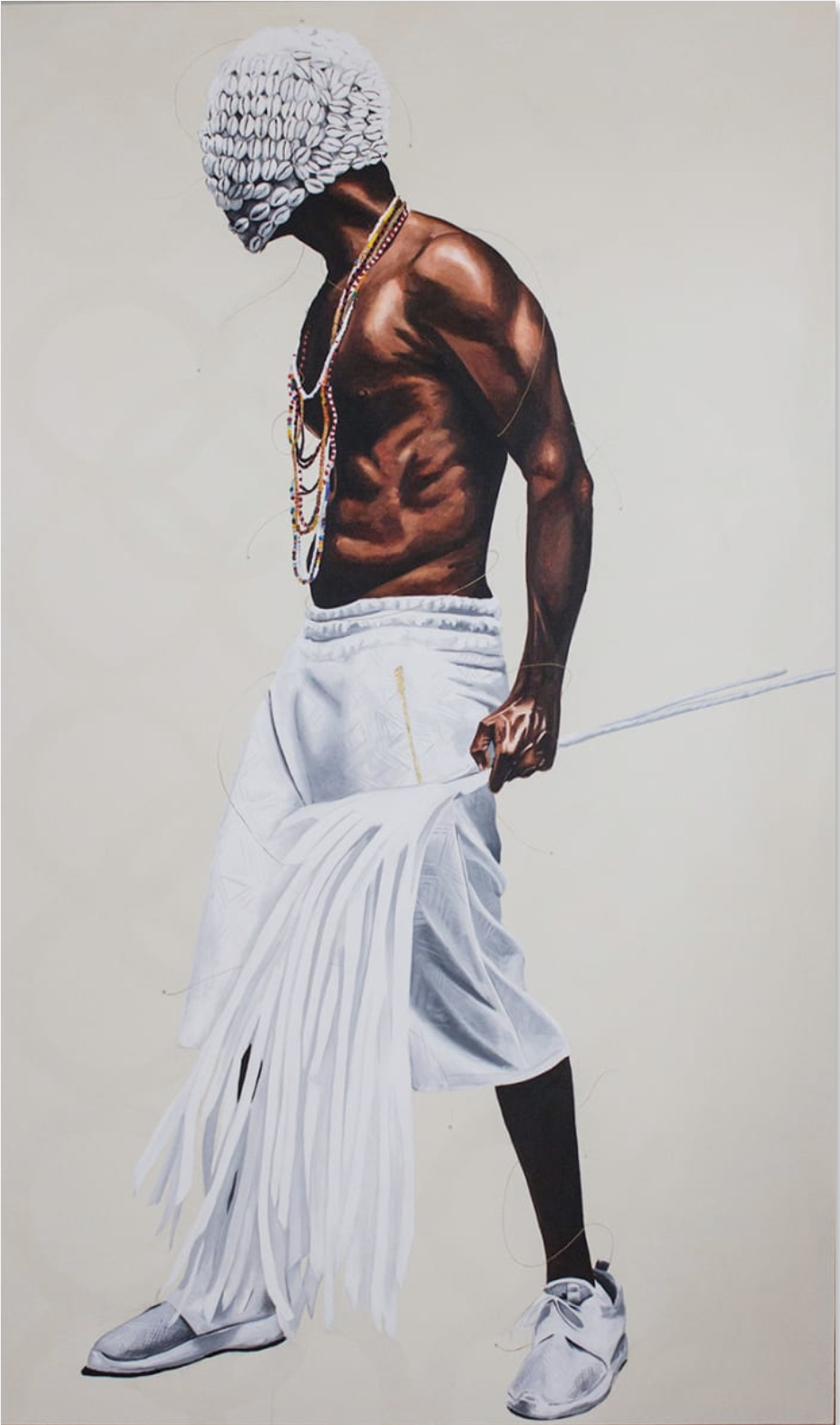
This piece by Fahamu Pecou was one of six paintings that comprised a visual dissertation for his PhD from Emory. The Collection was titled: Do or Die: Affect Ritual Resistance.
Using his body as the template Pecou, examines the “spectacle of death” surrounding young black men and boys that is far more thought-provoking.
Pecou writes, “Violence against Black bodies is endemic. Historically used to strip Black people from having any agency, the terror of physical harm or death has historically worked to contain and dehumanize communities of Black bodies. From the Trans-Atlantic slave trade, to Jim Crow, to this era of mass incarceration, Black men’s bodies have maintained a peculiar proximity to death. This spectacle of death remains a visceral inevitability instilling fear and panic, but perhaps worst of all—despair.”
Performing mourning rituals to mark the transition of a member of a community from the world of the living to the afterlife is fundamental to all cultures. Mourning rituals also have the power to heal a community during its period of grieving.
Concerned by the violent separation of the soul from the body in violence against black people of the diaspora and the lack of ritual, Pecou turned to Yoruba theology wherein life after death is seminal. Inspired by Egungun tradition of memorializing ancestors through masquerade. The Rising is that moment in time where the incarnate spirits of ancestors return through the body of a young man.
“We are all spirits on a journey. The significance in the paintings however refers to the idea that life is cyclical. The spirit figure is being prepared to return.... He is blessed by Orishas and made a warrior. This is significant in the context of this work because we are talking about resistance to the idea that we can be “ended” or destroyed through acts of violence against our bodies”
I listened to a conversation between Trevor Noah and Derek Fordjour where they were speaking about standing at a port in Angola where captives would be loaded onto slave ships. Derek termed it the ‘Door of No Return’, where you stand “between where you were and where you are going”. And for him, in that moment, he stated, “I get it. The whole diaspora…we all came through that door.” Dr. Pecou encapsulates that visually.
Remember, the spirit of the man from 1700 who hailed from the Bight of Benin stands at the Door of No Return. As he steps his bare foot onto the wooden hull of that slave ship, he enters the body of the son of his son, of his son, of his son, at the moment of this son’s need, a man over 300 years his junior. And the transmission of it all: secrets, wisdom, fear, intuition, how to survive, is re-membered.
~
Dr. Pecou earned his PhD at Emory University and has exhibited nationally and internationally. He is collected by the Smithsonian National Museum of African American Art and Culture, Seattle Art Museum and the Museum of Contemporary Art of Georgia. He just concluded his solo museum show at the Frist Museum in Tennessee and is the founding director of the African Diaspora Art Museum of Atlanta (ADAMA). Dr. Pecou is represented by Johnson Lowe in Atlanta, Arthur Roger in New Orleans, Conduit in Dallas and Backslash in Paris, France.
Abdoulaye Diarrassouba (ABOUDIA), 1983
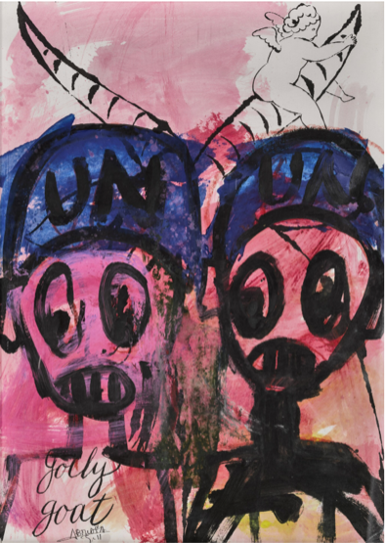
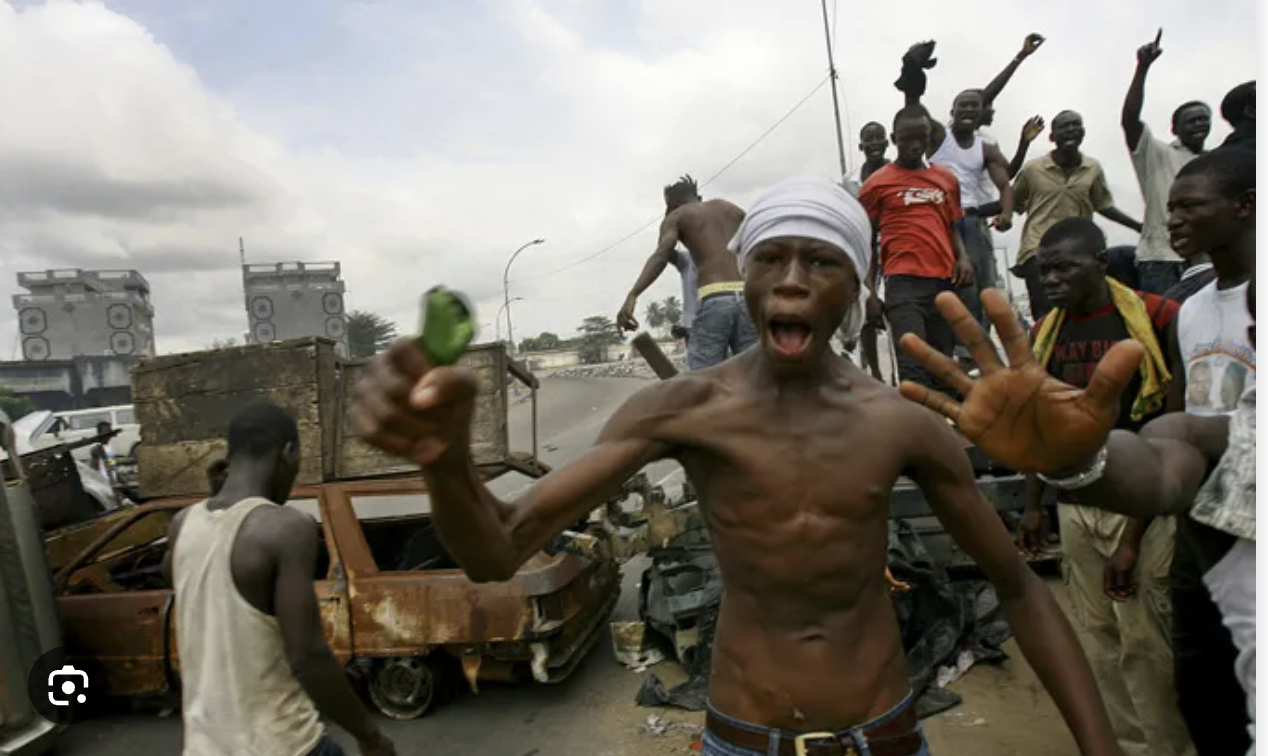
The "Jolly Goat" (c. 1954) is an offset lithograph originally created by Andy Warhol as promotional holiday art of a jovial goat. Because this piece was produced in unknown editions and is frequently resold through private sales and various galleries, ownership is dispersed among numerous individual art collectors globally rather than held by a single entity.
Aboudia, is a contemporary artist from Côte d'Ivoire, West Africa, whose vividly coloured, mural-style paintings describe the street culture and recent political unrest in his home city of Abidjan. His distinctive style is inspired by the iconography of Abidjan’s ‘Nouchi’ graffiti (the term refers to a colloquial dialect that is the preferred language of Ivoirians in Abidjan), traditional wood masks and Vodou. In thick layers of paint, oil stick and found materials (such as newspapers, magazines and art catalogues), Aboudia depicts everyday life for the children of Abidjan’s toughest, most dilapidated neighborhoods. The children’s chalk scrawls on the walls and pavements in those districts, he has said, express what is ‘deep within them,’ as well as their dreams and ambitions. Identifying with their experience, he seeks to ‘retransmit the message.’
This piece is particularly important and may in some ways be our dearest.
Abdoulaye Diarrassouba was born in 1983, in Abengourou, north of Abidjan. Aboudia came to international acclaim suddenly, with these nouchi style paintings he made to describe the violence in the wake of Côte d'Ivoire’s disputed 2010 presidential election. Throughout the ensuing standoff and the 2010–11 civil war he remained in Abidjan, taking refuge in his basement when explosions shook his studio walls. This piece is from that war, it’s done on the back of a reproduction of Jolly Goat, as Aboudia admired Andy Warhol’s relationship and wanted to say many things here. As the violence and chaos pounded against his studio walls, two UN soldiers suddenly broke down his door and Aboudia’s illustration of their ghoulish shock describes outsider perception and insider all at once…outside and inside of war.
Aboudia has become wildly successful, he is prolific and in some ways, his market is commercialized, so this piece is raw, from that moment in time, pure, and emotionally powerful. We should not have been able to access this level of work, but we were bidding at auction against a Japanese buyer and there was a glut of very large pieces that went for over $100,000 each….while the buyer was exhausted he weakly bid on this last tiny piece, seemingly uneducated as to it’s historical relevance and so we were able to, with energy, and bidding together, win at auction.
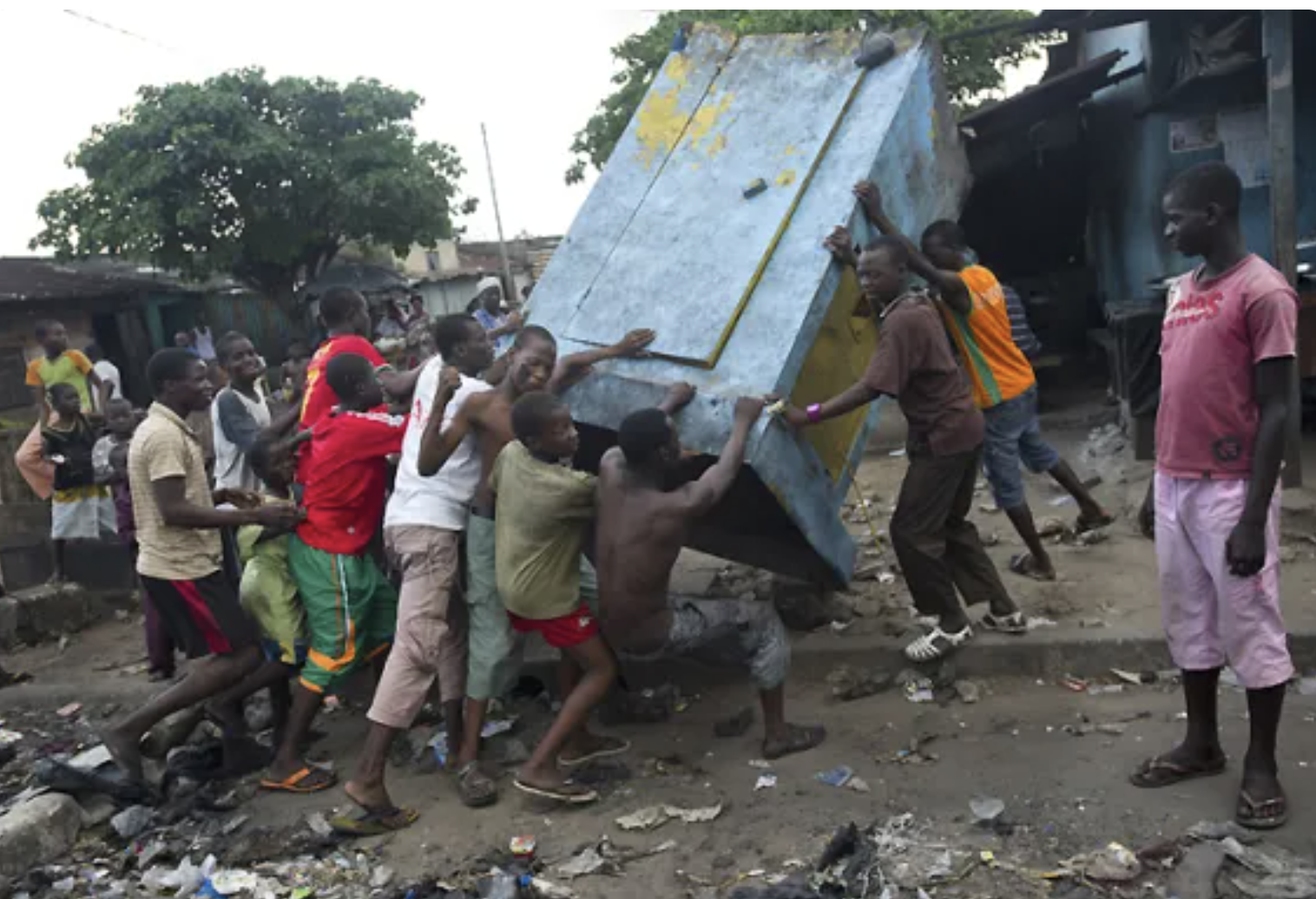

Golly Goat, 2011
mixed media on paper
46.5 by 34cm., 18¼ by 13⅜in.
Unique Work: YES
Signature: signed and dated 2011 (lower left); dated (on the reverse)
Acquisition: Jack Bell UK/ Sotheby’s NY
Includes a Certificate of Authenticity: YES
Appraisal: YES

White American Studies, 2026
Archival Pigment Print 1/2
20 × 16 in
Unique Work: YES
Signature: NO
Acquisition: James Charles Morris, The Hendrie in Detroit
Includes a Certificate of Authenticity: YES
Appraisal: NO
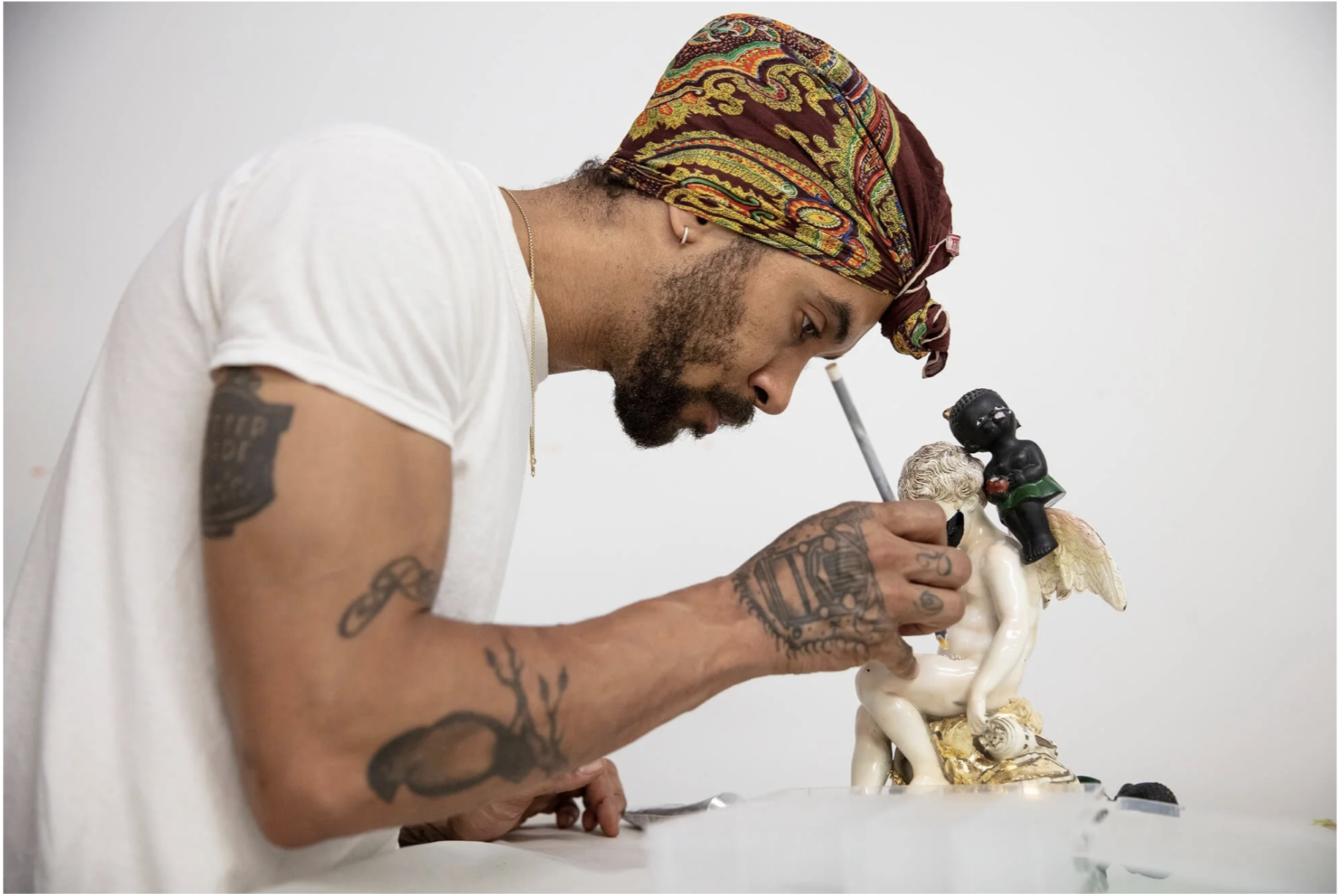
TONY RAVE, 1986
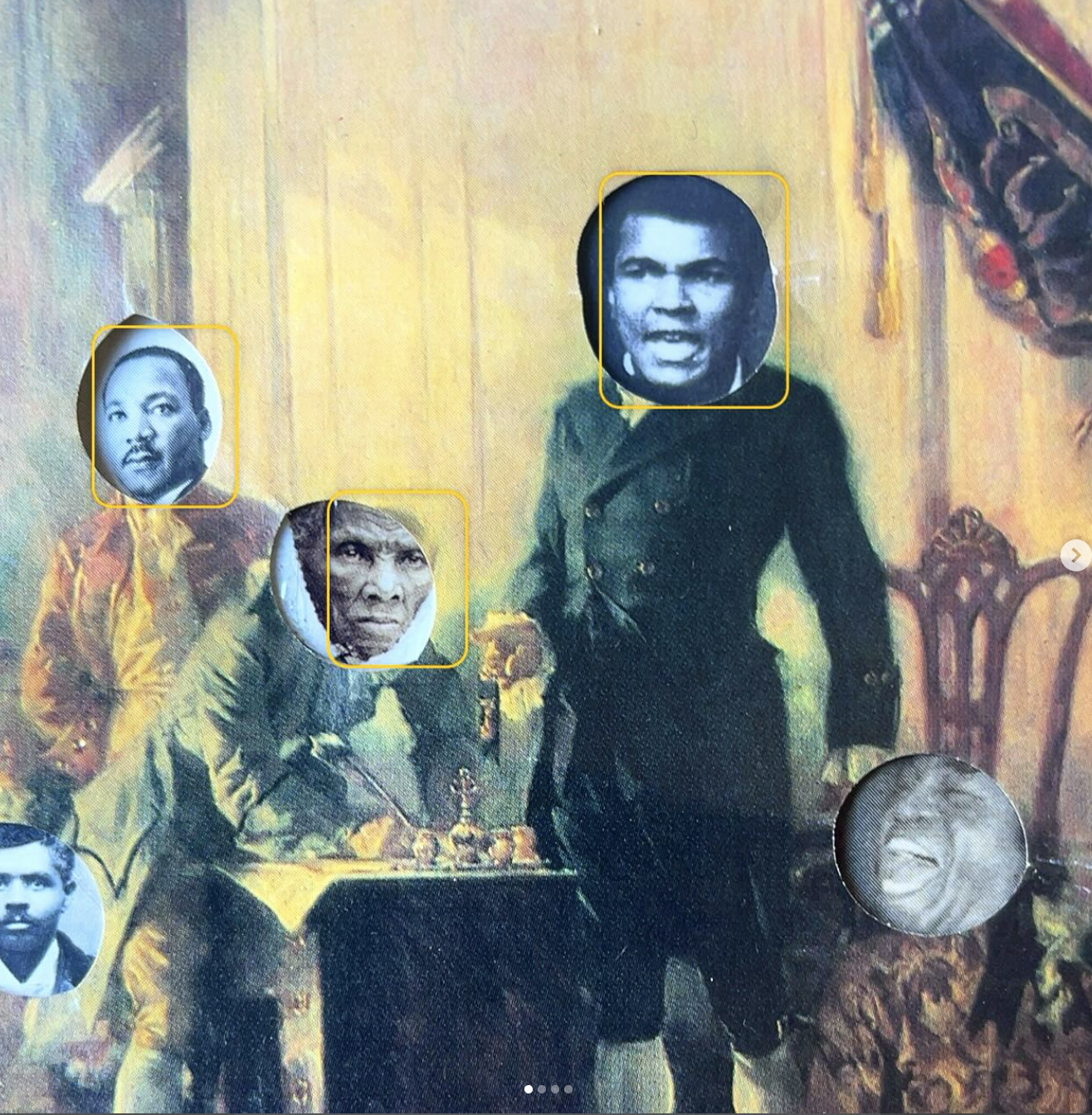
Tony Rave is a self styled “Detroit Andy Warhol”. He sees himself as an artist and a revolutionary whose work confronts the intersections of race, power, and memory. Working across painting, sculpture, and installation, using repurposed materials, Rave uses satire and familiar iconography to examine how systems of authority are normalized, marketed, and absorbed into everyday life.
His work invites viewers in through recognition, then unsettles them by exposing the deeper histories and structures beneath the surface.
Rooted in lived experience and shaped by growing up in Detroit, Rave’s practice reflects how policy becomes personal and how slogans, symbols, and public narratives quietly shape private lives. His work prioritizes honesty over palatability, positioning art as a mirror to the present moment and a record of patterns that continue to repeat.
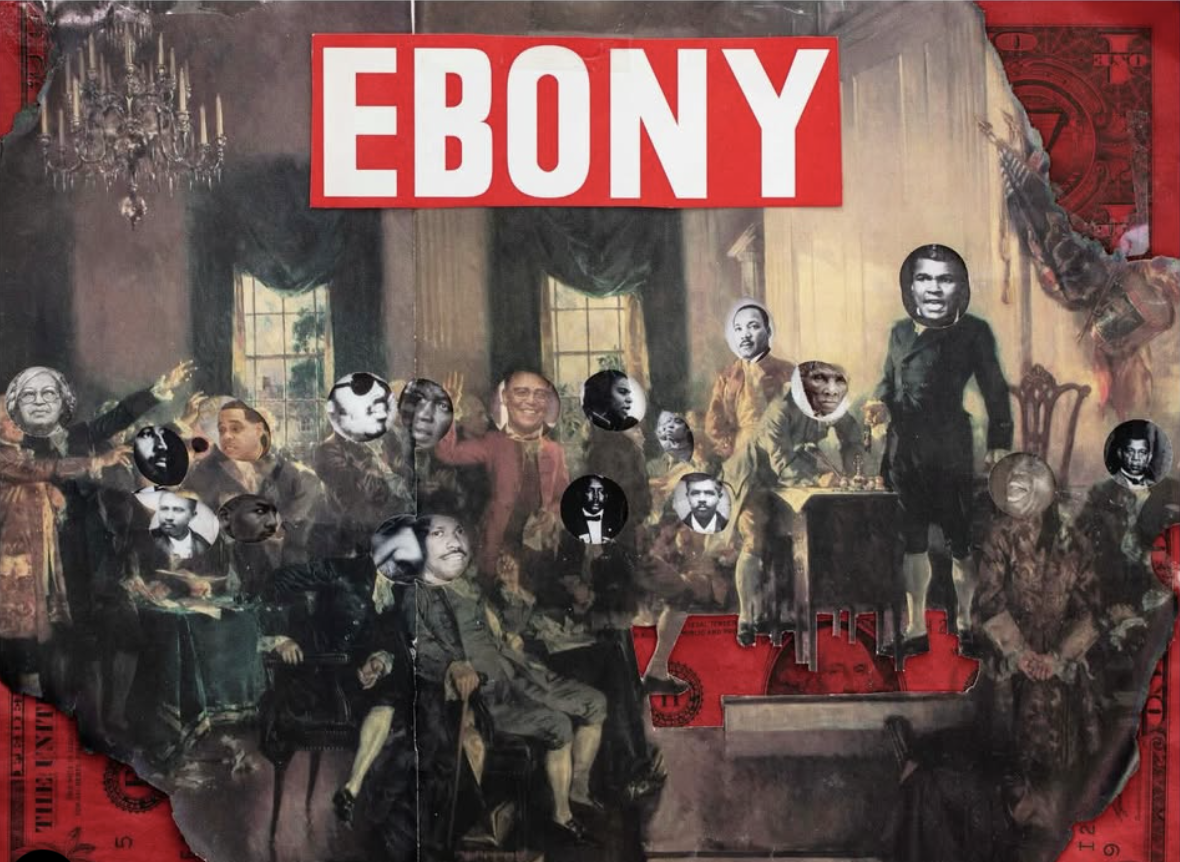
We have two pieces. Ebony magazine was founded in Chicago in 1945, it was revolutionary at the time in its effort to portray black people as positive, empowered, healthy and happy. Showcasing black American public figures, Ebony controlled the narrative during a time when the white press treated Black people as less than or non-existent.
I don’t think it incidental that the magazine passed through a few houses before being most recently purchased by Ulysses Lee "Junior" Bridgeman Jr. in 2020, five years before his death. Despite never making more than $350,000 a season during his NBA career, Bridgeman passed with a net worth of over $1.4 billion, making him one of the wealthiest former athletes in the world.
In 1940, Howard Chandler Christy painted the “Scene at the Signing of the Constitution of the United States” at the Independence Hall in Philadelphia on September 17, 1787.
Rave repurposes the painting replacing the faces of the signers with faces of Black Americans who have moved the needle. He sells the entire composition as an [iconic] Ebony cover. Tony glazes the whole thing in blood red, papered with real money to intimate the blood of our people that fertilizes the soil beneath the foundation of this [great] nation.
It's both self evident and a piece that requires reflection.
The sneaker is more poignant, sensitive, personal. Tony
~
Tony is self-taught, has mural work in historic parts of the city, has exhibited with the Museum of Contemporary Art in Detroit, and has been awarded residencies with Modern Ancient Brown, Red Bull House of Art and the Heidelberg Project Art. He has exhibited most recently with M Contemporary in Ferndale and Playground, Detroit.
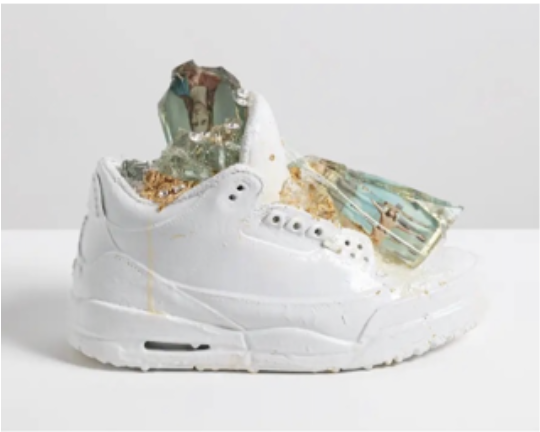
Untitled, 2026
Nike Sneaker, porcelain, gold leaf, glass, resin, mixed media and Swarovski crystals
7 x 12 x 4.5 in
Unique Work: YES
Signature: NO
Acquisition: Artist’s studio, mediated by Paulina Petoski
Includes a Certificate of Authenticity: YES
Appraisal: NO
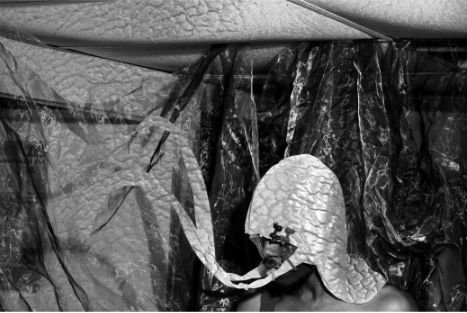
Showday, 2026
Photography, Inkjet transfer on Aluminum
9 × 11 in framed
Unique Work: YES
Signature: signed verso
Acquisition: Playground Detroit
Includes a Certificate of Authenticity: YES
Appraisal: NO
RAYMAR, 2020
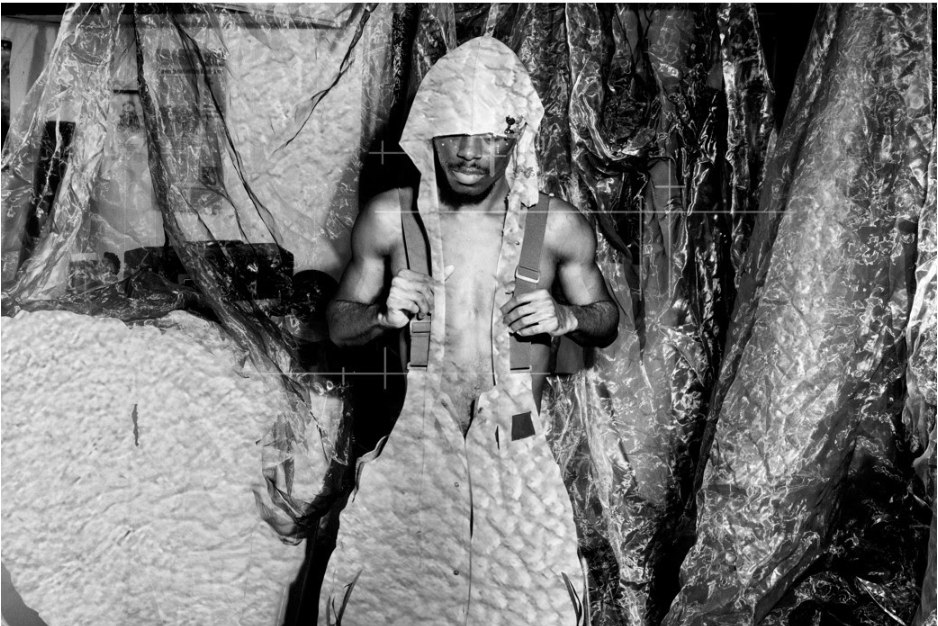
Base II, 2026
Photography, Inkjet transfer on Aluminum
9 × 11 in framed
Unique Work: YES
Signature: signed verso
Acquisition: Playground Detroit
Includes a Certificate of Authenticity: YES
Appraisal: NO
Raymar is a young artist, educator and curator in Detroit. He took
photographs of his people and transposed these onto photos of the natural
world. He developed and designed a process of printing these images and
dragging them across a plate of aluminum. It’s a process of deep,
intentional and careful craft that gives the work a sculptural form and a
kinetic nature that doesn’t exist in the perfect still. The pictures here are a
response to his uncertainty, stagnation and the weight of transition during
pivotal moments in his life. He asks, “Are imagination and innovation,
the only way to move through and out?”
~
Raymar earned his BFA from the College for Creative Studies in Detroit. He is a 2025
Emerging Artist Fellowship recipient, powered by Gilbert Family Foundation which
highlights the work of BIPOC and LGBTQ+ artists. He recently concluded his solo
exhibition, Lightstruck Phenom, at Playground Detroit.
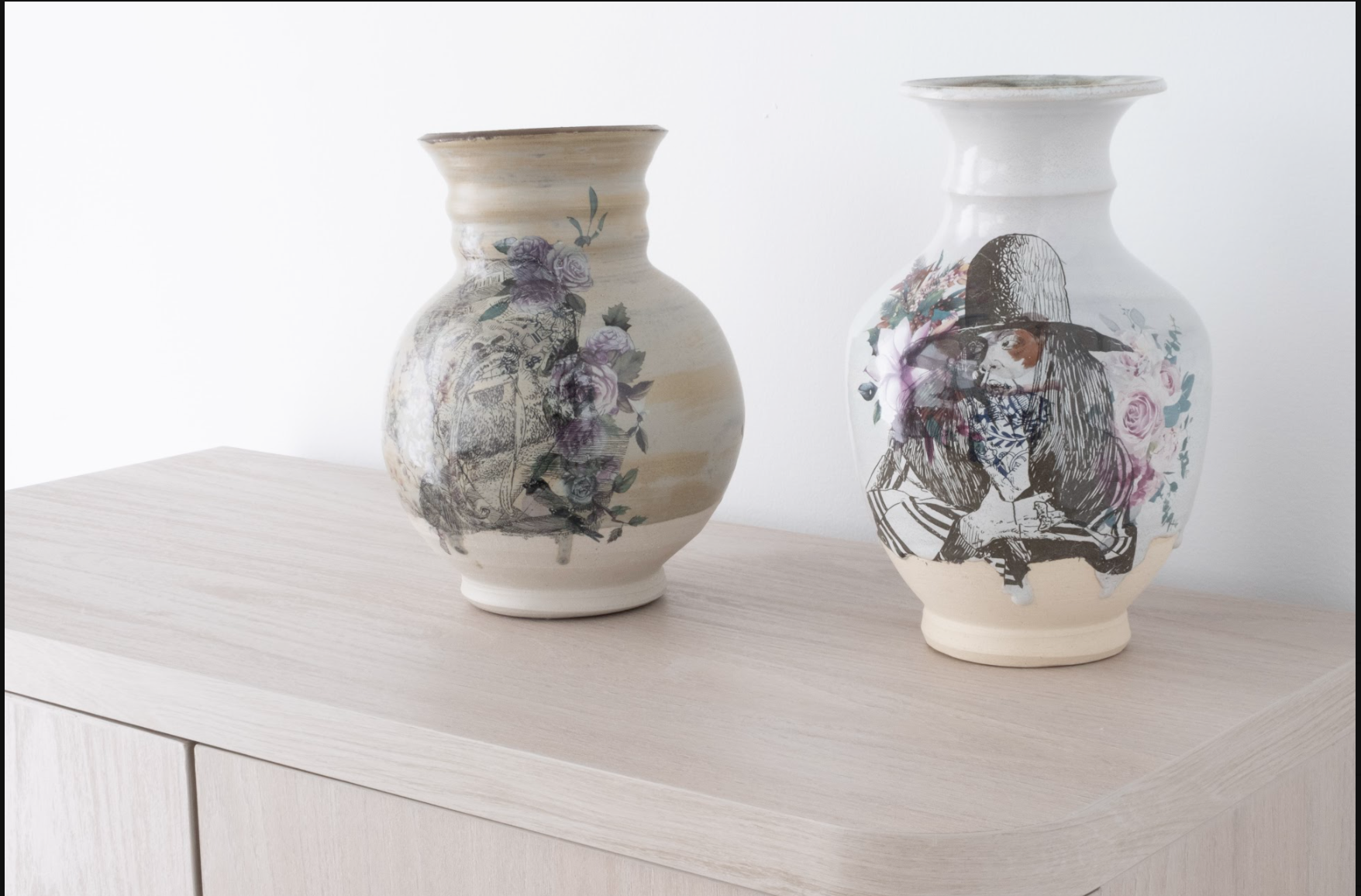
Badu Vase, 2025
Method Man Vase, 2025
Clay, paint, vintage and custom hand drawn decal
14 inches tall
Unique Work: YES
Signature: signed on the bottom
Acquisition: Artist’s Studio
Includes a Certificate of Authenticity: YES
Appraisal: NO
Roberto Lugo (b. 1981)
Somebody once told me I would die before I be something.
More likely to fry before I freeze something.
I am not the one to tell you what you should feel
You understand my pain because you know how the sutures feel.
And when it rains you understand how a roof would feel.—RL
Roberto Lugo is a Puerto Rican ceramicist, social activist, poet, and educator. They utilize classical pottery forms in conjunction with portraiture and surface design to highlight themes of poverty, inequality, and racial injustice.
They utilize traditional European and Asian ceramic techniques in conjunction with portraiture and surface design to highlight themes of poverty, inequality, and racial injustice. Their work is a form of graffiti, illustrating individuals whose faces are historically absent from couture vases, a canonical fine art item.
In 2014, Lugo was selected as an Emerging Artist for the National Council on Education in Ceramic Arts. Lugo's deeply personal lecture, part spoken-word performance, part sermon, electrified the crowd of nearly 5,000. Lugo stated, “I see the act of making pots, from the ground, something that we stand on, as a form of revolution. I see ceramics as a democratic art.”
I went to see a few extraordinary exhibits at Cranbrook the other day with my mama: Labyrinth, Drawing Thread, A Dreaming Hour and Monumental Color. As we sat in the portico and reflected on the brilliance of it all, an older white couple sophisticate stepped out. My mother, giddy, asked, ‘What did you think of the art!” In heavily accented English, the woman smiled tightly and said, “Well…it’s not really art, is it?
Lugo’s work re posits this question, “Is it?”
~
Roberto holds his MFA from Pennsylvania State University. Lugo is a recipient of the Heinz Award, Pew Fellowship, United States Artists Fellowship, and Rome Prize, and his work is held by institutions including The Metropolitan Museum of Art, LACMA, the Philadelphia Museum of Art, the Brooklyn Museum, and the Museum of Fine Arts, Boston.
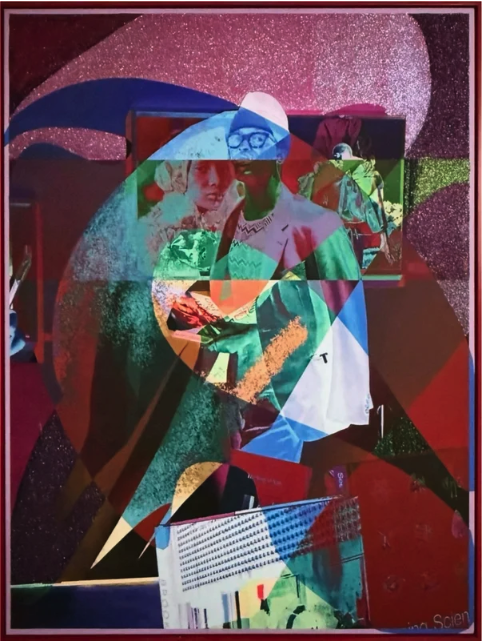
AMANI LEWIS, 1979
Niggas in Museums #5, 2023
Acrylic, pastel, glitter, digital collage on canvas
57 × 43 in
Unique Work: YES
Signature: signed verso
Acquisition: Private Collection Philippines/ Vanguarts Auctions
Includes a Certificate of Authenticity: NO
Appraisal: NO
Amani documented their family through video and audio recordings, while
mining family photo albums for source material. Through this archive, they
weave storytelling, spirituality, and familial imagery into new visual forms
that honor the complexity and multiplicity of Black life. Portraiture becomes
a means of deepening their connection to family and ancestry, revealing
the beauty, love, and abundance of Blackness.
“Photography is at the heart of my practice. Once I find or take an image, I
spend time with it in a digital landscape, bringing certain elements forward
in Photoshop while quieting others. The image is then screen-printed onto
canvas, where I rework the surface with paint, pastel, and glitter. The idea
may begin with the photograph, but it is not fully realized until the final
layer.”
For Amani, the portrait begins long before the photograph or first
brushstroke. It begins with listening.
“The greatest privilege of my career has been the relationships I’ve built
with the people I paint. I spend time learning who my sitters are, where they
come from, what they have survived, what they love, what they have lost,
and what they hope to become. Their stories inevitably become part of
mine.
N*ggas in Museums #5 was a reflection on not seeing black people in
institutional spaces and documenting those that she came across. Museum
collections shape cultural memory by selecting, preserving, and framing
physical artifacts and oral histories. They act as public memory banks that
anchor identity and connect past experiences to future generations. As
such, they are vital to the construction and reinforcement of a society’s
collective identity. Therefore, “museums, and the how they validate and
consolidate memory and imagination, are both profoundly political”. This is
one of a series of 6 in which Amani commented on the black viewers she
did see in museums looking at her work.
“Success has given me opportunities, but the people I’ve met through this
work have given it meaning. To be trusted with someone’s story, and to
translate it into a painting that allows others to feel seen, understood, or
remembered, is the greatest accomplishment I could ask for. If my work
has any lasting purpose, I hope it preserves not only likeness, but
humanity.”
~~Amani holds a BFA from the Maryland Institute College of Arts. They
have set auction records in the black contemporary art world and is part
of the permanent collections at ICA Miami and the Broad Museums.
They can be reached directly through their studio at
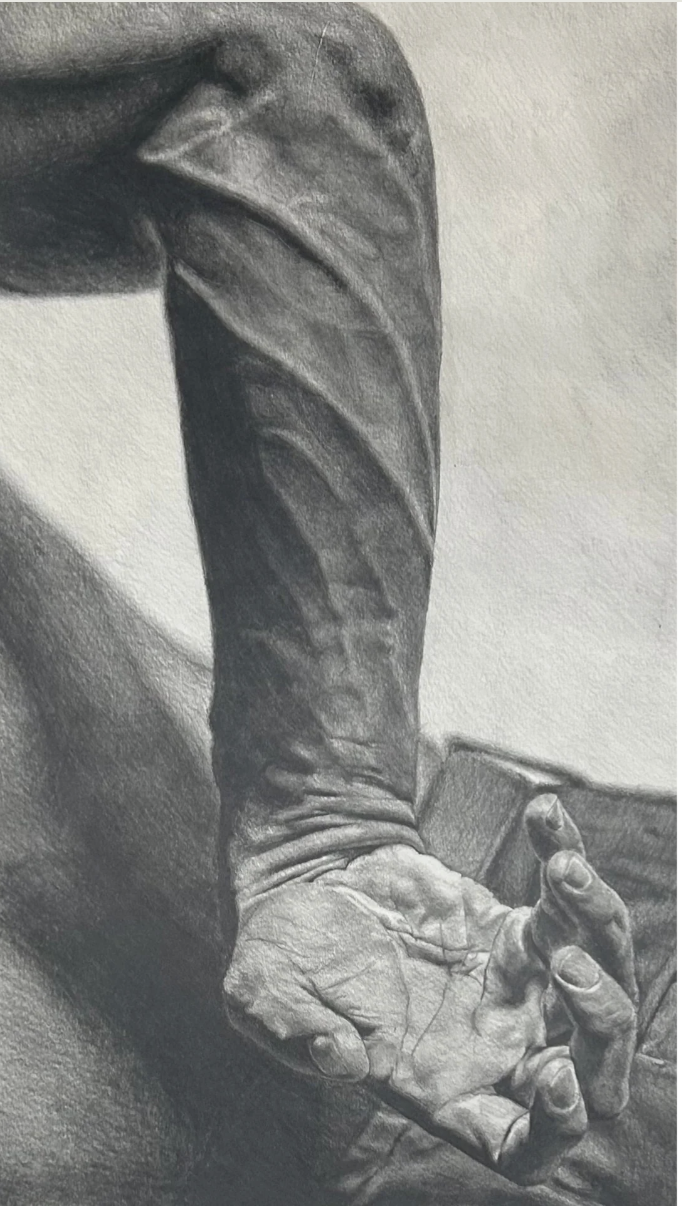
Praise God For This Hand: Self Portrait #3
pencil drawing on paper
20 x 30 inches
Unique Work: YES
Signature: yes, titled and dated
Acquisition: Private Collector from Detroit Breakfast Club/ Black Art in America
Includes a Certificate of Authenticity: YES
Appraisal: NO
Genesis Tramaine, 1983
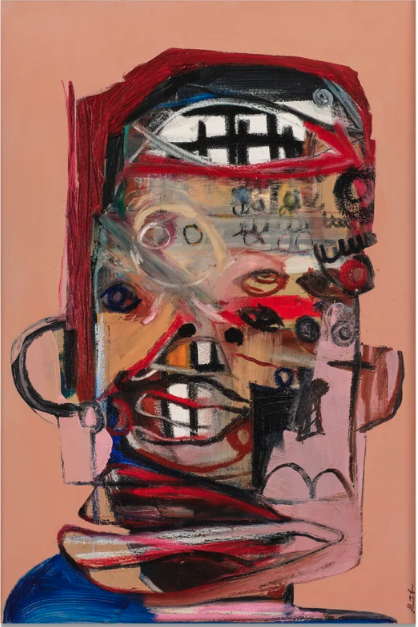
Covered by Grace, 2020
acrylic, oil stick and paint stick on canvas
35 ⅞ by 24 ⅛ in.
Unique Work: YES
Signature: yes, titled and dated
Acquisition: Almine Rich/Sothebys/Private Collection, sale mediated by Aous and Michael Ficek
Includes a Certificate of Authenticity: YES
Appraisal: NO
Genesis Tramaine (b. 1983) is an expressionist devotional painter who creates abstract portraits of men and women who transcend gender, race, and social structures. She digests the everyday and regurgitates it as work that evokes déjà vu, beckoning memories of past lives and glimpses of undiscovered futures. The blueprint of Genesis’ style is rooted in strong mix of 1980’s urban New York graffiti, and imagined images of gospel hymns sung on Sunday morning during church.
Tramaine paints with a confrontational and provocative use of color and through an urban-inspired, mixed-media approach. The artist describes her practice as focused on the shape and definition of the American Black Face, explaining that her subject’s exaggerated features capture the spirited emotions of the untapped, underrepresented soul of Black people through a mixture of acrylic and oil-based paintings.
Tramaine’s work is also powerfully influenced by Bible verses and other readings she studied in church. Her spiritual influences have a strong impact on the composition and depth of her paintings, which explore deeply human themes including ethics and insanity, the mundane and the inhumane, spirituality, sexuality, and sentimentality.
“It’s a walk with, sister. It’s not a tap in, ’cause I need God all the time, sis. I mess up so much—we human, we built to mess up—so I’d rather have God all the time. And I’ve learned that I need to be a constant listener. The best way I can describe it is like maybe the way a doctor would feel when they’re on-call—you know, always available. So when the good Lord taps my left shoulder and says, Let’s get up and go, you know, I get up and go. And it’s not always paint that’s involved in that get-up-and-go, it’s just answering that call.”
Born in Brooklyn, NY, Tramaine earned her M.S from Pace University and B.S from Utica College of Syracuse University. She has exhibited nationally and internationally, including an inaugural solo exhibition with Almine Rech in London in February 2020, Parables of Nana, as well as exhibitions at Almine Rech's locations in Brussels (2021), Aspen (2021), and New York (2022); In 2023, Tramaine was the subject of the solo exhibition, Everything is Now at the Center for Contemporary Art Vancouver (CICA), and was included in the exhibition, The Echo of Picasso at the Museo Picasso Malaga, Spain. In 2020 Tramaine was the Rubell Museum's featured Artist-in-Residence, a collaboration that concluded with a solo exhibition of the artist's work at the Rubell Museum Miami, Genesis Tramaine, that remained on view for a full year. Her work resides in prominent museum collections, including the Institute of Contemporary Art, Miami, Florida; the National Gallery of Art, Washington DC; the Rubell Museum, Miami, Florida; the Crystal Bridges Museum of American, Bentonville, Arkansa; the Hirshhorn Museum, Washington DC; the Buffalo AKG Art Museum, Buffalo, New York.
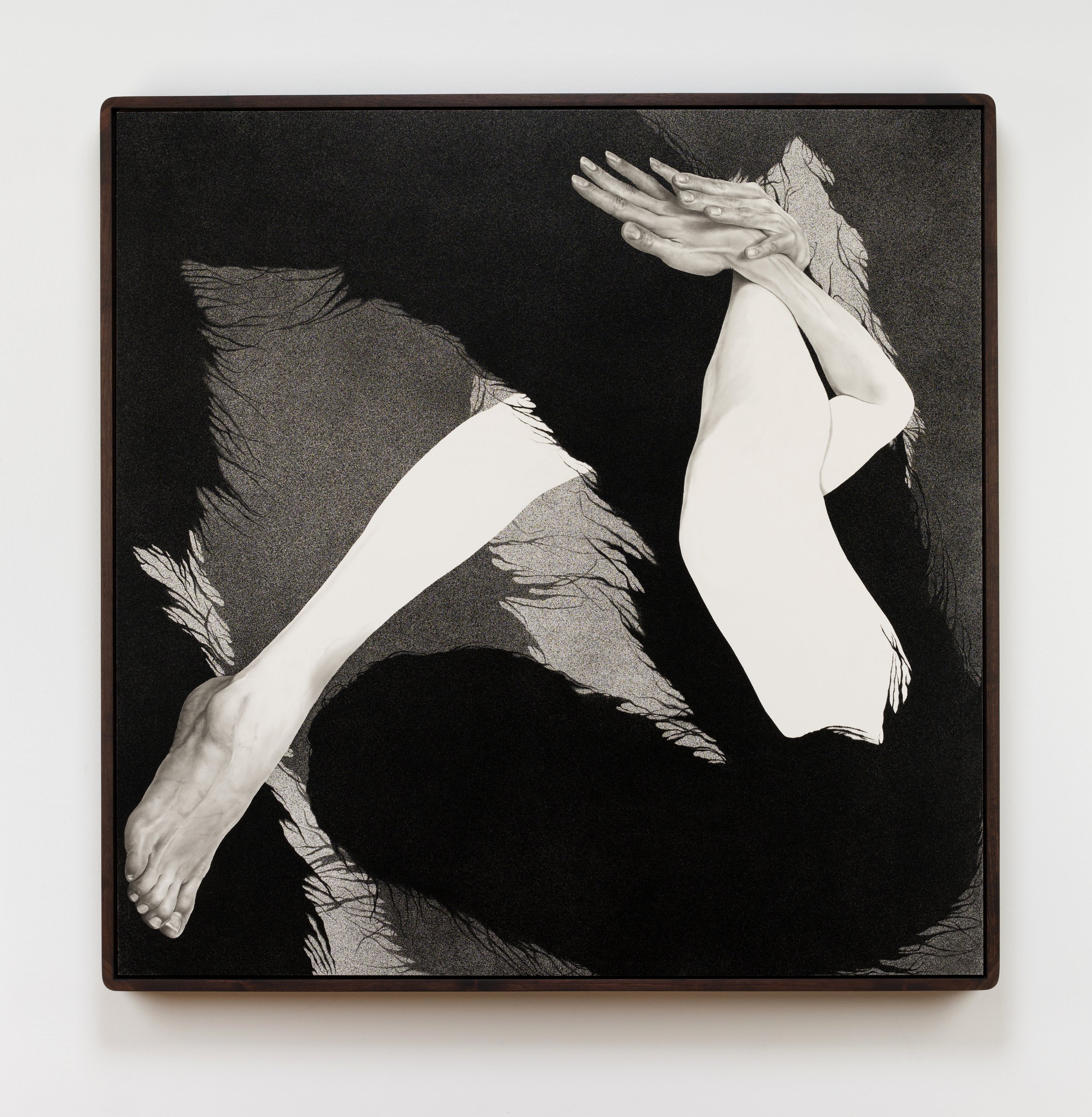
SAMANTHA WALL, 1977
Portland artist Samantha Wall, born in Seoul to a Korean mother and a black father, who she has yet to meet, draws upon mythology to depict variations on a serpent woman.
In Korean lore the goddess Eopsin takes the form of a black snake who protects the home and acts as the goddess of the storage and wealth in Korean mythology. Koreans considered snakes who eat mice and rats, sacred beings. As the story goes, a Chinese couple were devastated that they had only one child and that child was a girl. When the girl became pregnant before marriage, they shoved her, pregnant and screaming into an iron box and threw her into the sea. As she descended through this underwater world, she transformed into a snake and that is how she gave birth but not to one, but seven children, who were also snakes. The box eventually floated to the surface but people were afraid of the snake mother and her children and reviled them, all but one family who was kind and these, the Song family, Eopsin blessed with great wealth.
This is a repeating theme through history. , a witch woman who preys on the fertile or struggles with pregnancy or childbirth. At /frizeKitagawa Utamaro’s “Yamauba and Kintarō
Here, the serpent woman’s tangled limbs and flowing hair defy human bodily limitations and push against the frame’s confining borders, presenting femininity as a powerful yet vulnerable state of being.
To create her drawings, Wall uses intricate hand-cut stencils and meticulously layers sprayed ink with conté crayon. The resulting figures are composites of the artist and others, most often biracial women. Informed by Wall’s perspective as a Black Korean immigrant in the United States, the multidimensional compositions trouble the exoticization of those who are perceived as “other” and embrace the complexity of transcultural identity.
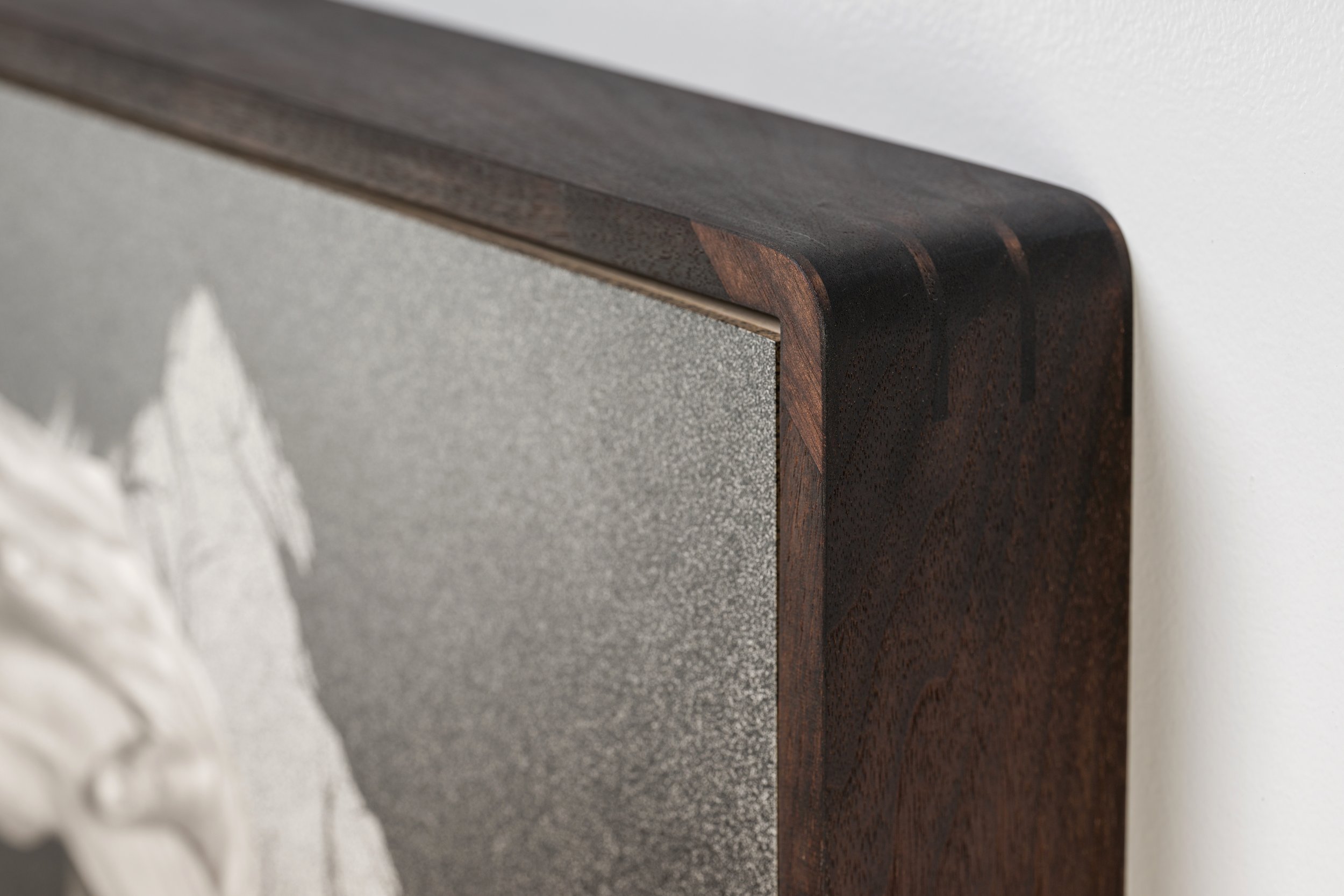
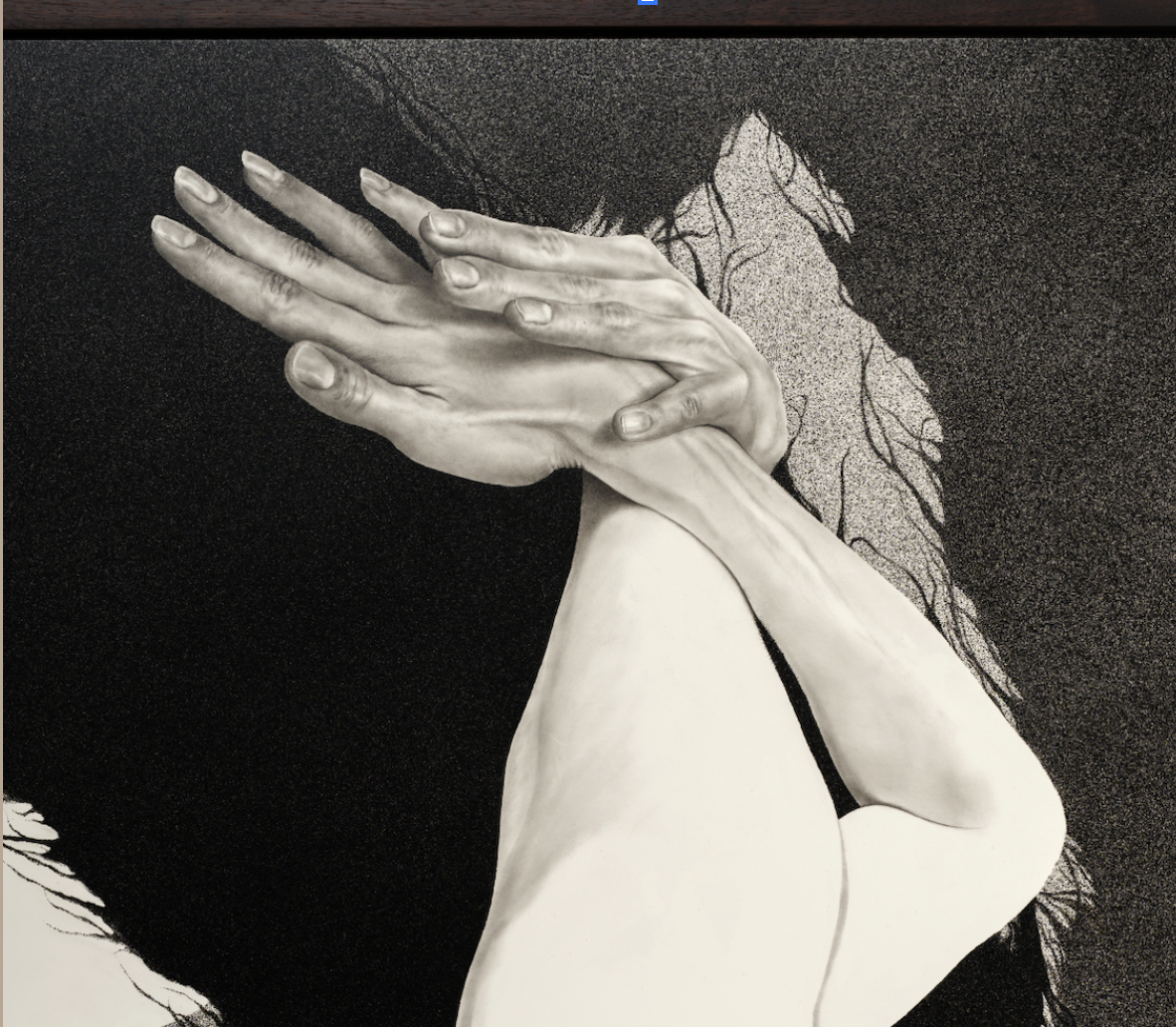
Wild Seeds No. 3, 2024
ink and conte crayon on Claybord
37.5 x 37.5 inches
Unique Work: YES
Signature: unknown
Acquisition: Timothy Hawkinson Gallery, Los Angeles
Includes a Certificate of Authenticity: YES
Appraisal: NO
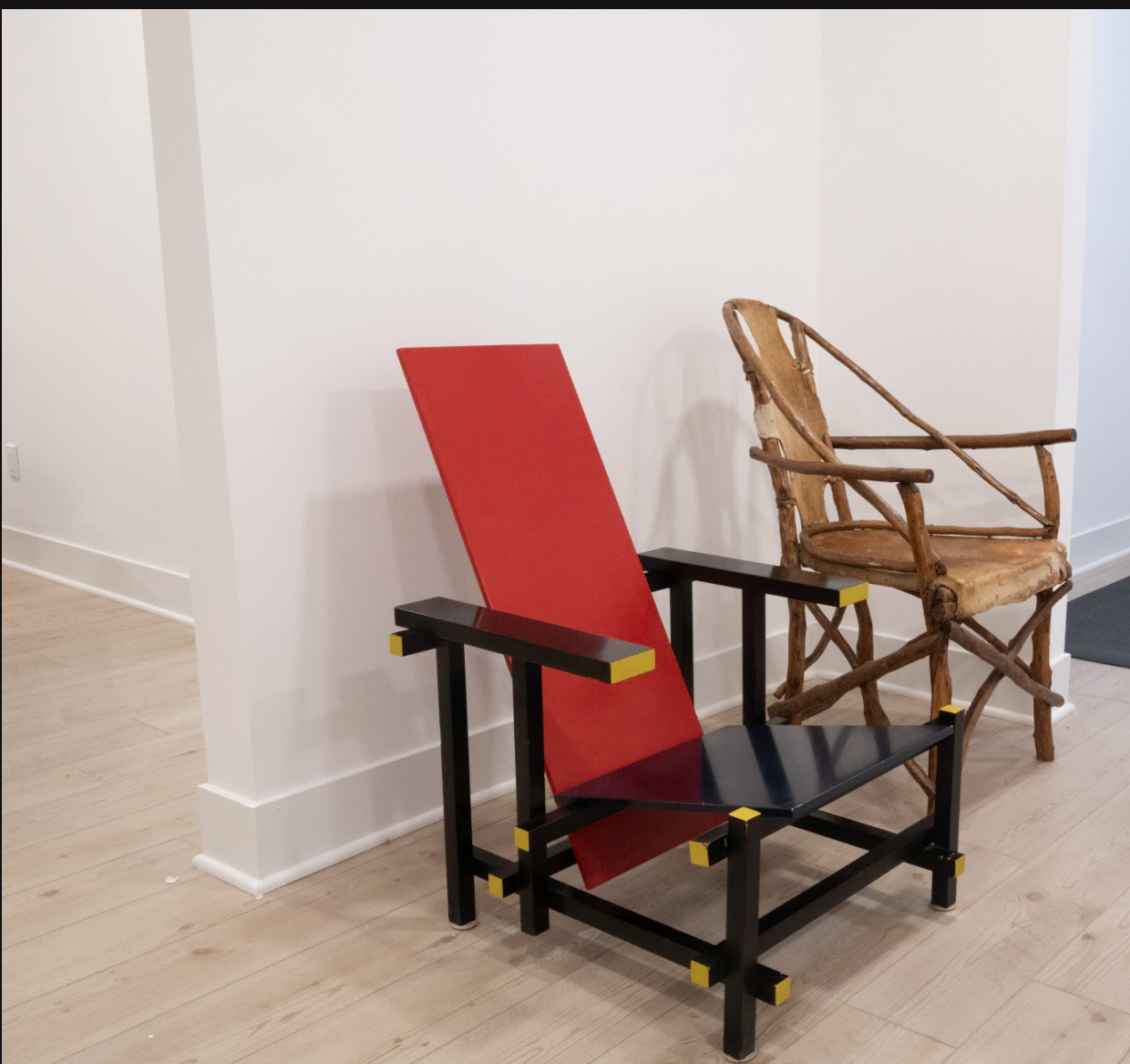
Unknown Artist, 1999
Luo Chair, 1992
Animal skin, tree branches, resin
I purchased this chair, a tribal construction, from a family in Nairobi when I was 19. I was living on the border between Kenya and Tanzania, doing research on rites of passage and clitoridectomy prior to the female genital mutilation movement. The chair was used to carry girls in the liminal period prior to the ceremony, when they are dressed in ash and burlap.
I have toted it with me, all over the world, it has sat untouched in every home I have ever had. I keep it as a reminder of how as a girl, the quality of our lives is largely in the hands of fierce mothers and gentle fathers. I am grateful for both of mine.
Gerrit Rietveld, (b. 1888)
Red Blue Chair executed by Gerard van de Groenekan, 1962
Painted wood
This chair, a gift from my father, is a masterpiece of the De Stijl art movement and a response to the violence of World War I. Mr. Gerrit believed that there was a greater goal for a furniture designer than just physical comfort: the well-being and comfort of the spirit. To this end, following what he felt were crimes against humanity, Mr. Gerrit and his de Stijl colleagues sought to create a utopia based on a harmonic human-made order. New forms, in his view, challenged how people thought about structure. Mr. Gerrit believed this movement could renew Europe.
As we have grown our collection, I have been very surprised to learn how much art was a part of everyday lives. As children, my sisters and I abused this chair. We would drag it close to the fireplace, sit in it with our feet up, eat pizza and read books…my father forbid us from sitting in it, even going as far as to put a sign on it and a rope around it, but we would wait until he went to bed and then drag it over…it felt good, it soothed the bottom of the sitter. And I can attest, as an architectural masterpiece, it has stood the test of time.
~
Gerrit is self-taught. He had his first retrospective exhibition devoted to his architectural work at the Central Museum, Utrecht, in 1958, just a few years before he passed. After his death, Gerrit work achieved worldwide recognition.
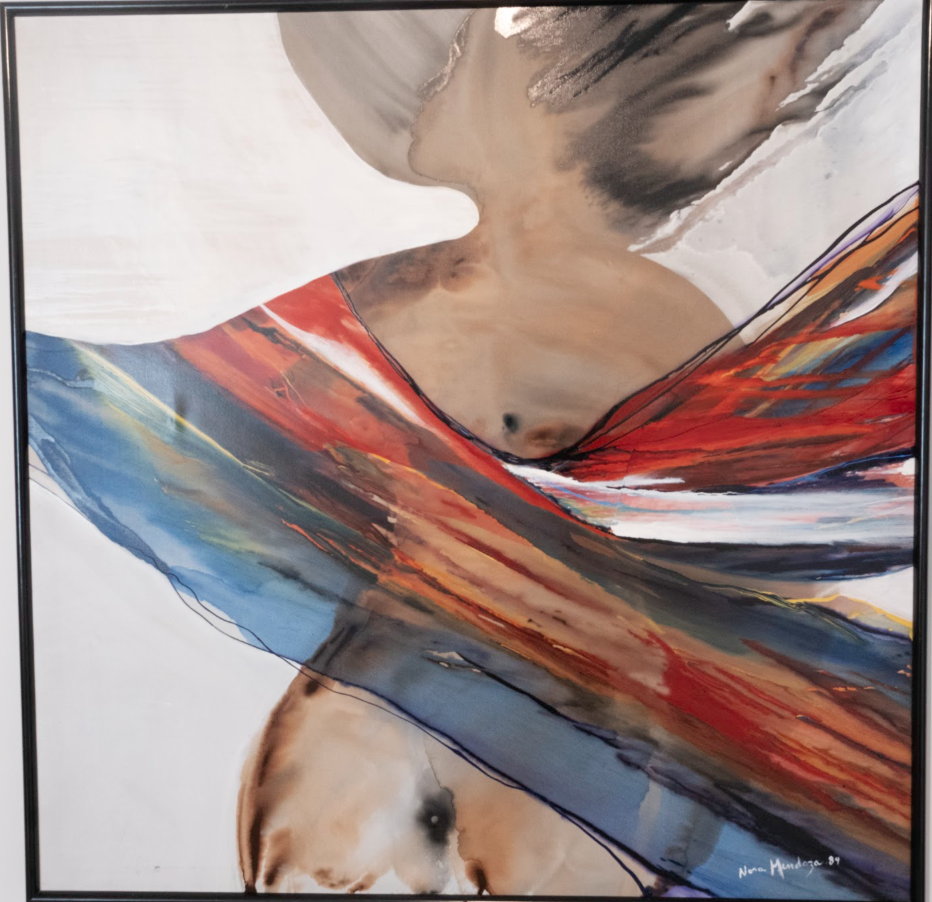
Nora Mendoza (b. 1927)
La Llorona (The Weeping Woman)
Oil on canvas
Nora Chapa Mendoza is a painter, educator, activist, and enduring presence in Detroit’s arts community. She was also a close friend of my father’s. In 2024, at 99 years old, she was named a Kresge Eminent Artist. In 1978, Nora founded Nuestras Artes de Michigan, a network of Latino artists and organizations devoted to advancing Latino art, unity, freedom, accessibility, and integrity. She was also a founding member of the Michigan Hispanic Cultural Art Association.
Elements of Nora’s work speak to her Indigenous roots. The movement of her brush can evoke the wing of an eagle, her totemic animal, while figures dissolve into and reemerge as natural landscapes. Her palette is drawn entirely from the earth—rock, sand, soil, and sea. Mostly abstract, her paintings hold the pain of injustice, the healing power of human resolve, and the beauty of nature.
La Llorona is a ghost in Hispanic American folklore who wanders near water, mourning the children she drowned in pursuit of a man who wanted her but not them. Versions of this dangerous, grieving crone appear across cultures: La Llorona in Mesoamerica, Yamauba in Japan, Aswang in the Philippines, and Eopsin in Korea.
Anthropologists have theorized that such myths emerged partly in response to women’s power to create life and the threat that power posed to patriarchal structures. They may also reflect the sexual violence women endured through colonization, rape, forced motherhood, and the exploitation of their children. Before colonization, related female figures were often understood as wise, protective, or divine. Over time, trauma transformed them into sinister, grieving, or vindictive beings.
Christian proselytization further distorted Indigenous mythology and cosmology, leaving ancestral memory vulnerable. As older faiths were suppressed, many Indigenous people were taught, forced, or persuaded to associate women with magic with the devil. Medicine women, healers, and pregnant women carried this burden disproportionately.
Nora’s work asks: “How does art seek to uncover our buried truths?”
~
Nora is a graduate of the College of Creative Studies, has exhibited globally, is in the permanent collections of politicians and corporate throughout Michigan and Texas. She is a 2024 Kresge Eminent Artist. She is represented by Rivers Edge Gallery
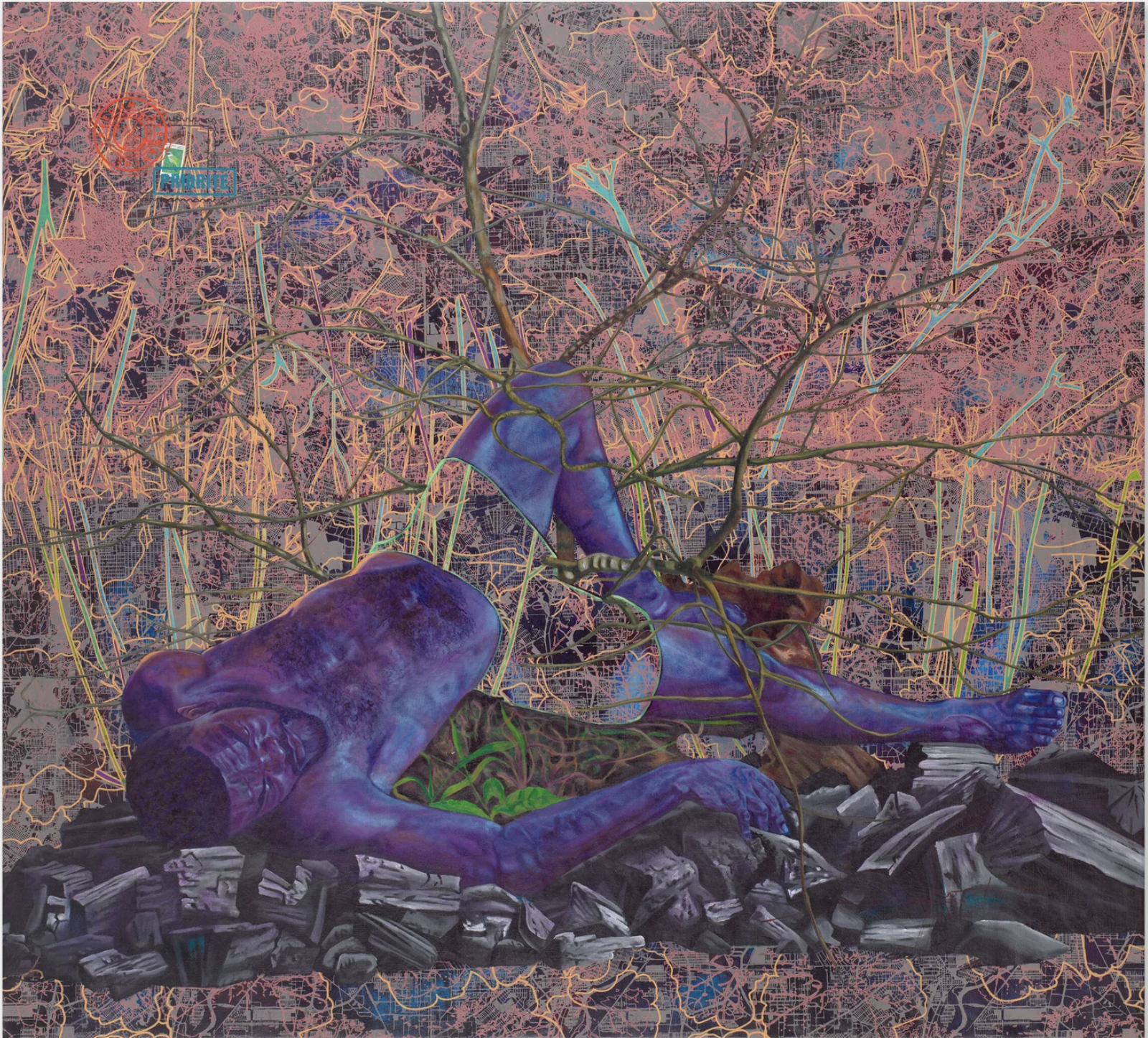
Jean David Nkot, b. 1989
Cobalt is used to manufacture nearly every lithium-ion rechargeable battery used in smartphones, computers, and electric vehicles. The DRC holds more cobalt reserves than the rest of the planet combined. This critical resource, however, comes at a staggering human cost, the trafficking of children to work in the mines.
An estimated 40,000 children are exploited for forced labor in the DRC yearly. Cobalt is toxic to touch and breathe, and these babies dig unstable tunnels, carry crushing loads, and wash cobalt ore with their bare hands. Their baby bodies are routinely exposed to violence, injury, illness so we can sit on our phones. The environment is subhuman, and apocalyptic.
A painter of the human condition, Jean-David Nkot has developed a realist practice attentive to the wounds of history and the machinery of globalized capitalism. Since 2020, his work has examined the exploitation of African raw materials—cotton, cocoa, and minerals—and the effects of these extractive systems on people and the environment. His process involves primary research, interviewing and photography. Drawing from his photos, he arranges his compositions with the intent of interrogating the role these resources play in the global economy while exposing their social and ecological consequences. Then he paints from his references, the condition of suffering and uses a digital embroidery to give his figures an actual terrain.
Situated between memory and this now moment, his work reveals the fractures created by industrialization and asks viewers to confront the relationship between humanity, consumption, and the natural world. “Addressing the human condition means creating a dialogue between humanity and how we consume things. It is also a way burying my ego. The figures I represent are often ‘crypto-portraits’: as in I am me, I am you, We are we."
~
Jean David earned his MFA from Institute of Fine Arts Foumban, Foumban, Cameroon. His work has been showcased globally and institutionally and is collected by FRAC Sud, Fondation H, Fondation Blachère & Fondation Almas.
##Essoufflement végétal@.com, 2026
Acrylic and silkscreen printing on canvas
59x65 in
Unique Work: YES
Signature: unknown
Acquisition: Afkaris Gallery in Paris
Includes a Certificate of Authenticity: YES
Appraisal: NO
IJANIA CORTEZ (b. 1990)
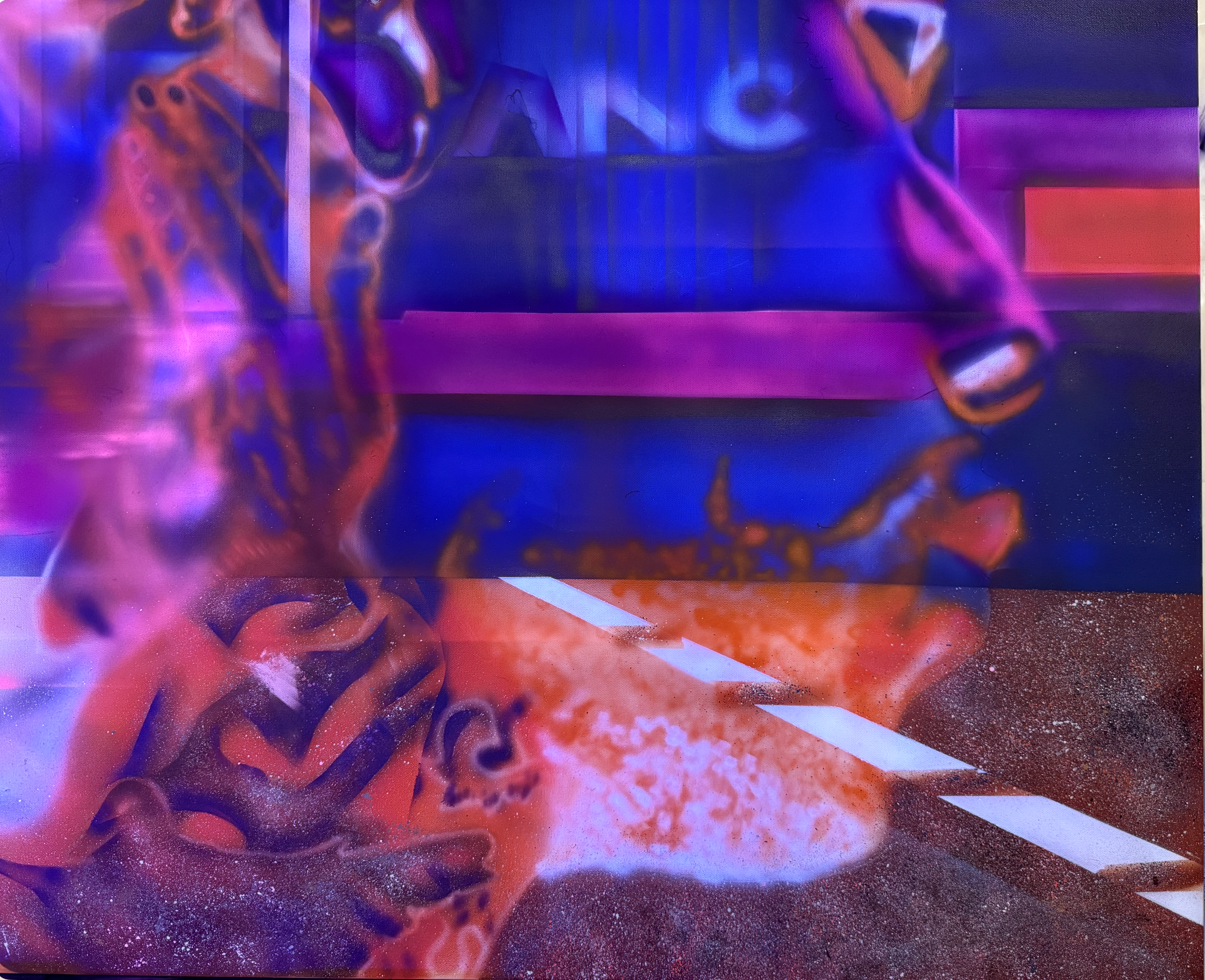
I was Here, I was There, I was Nowhere, 2026
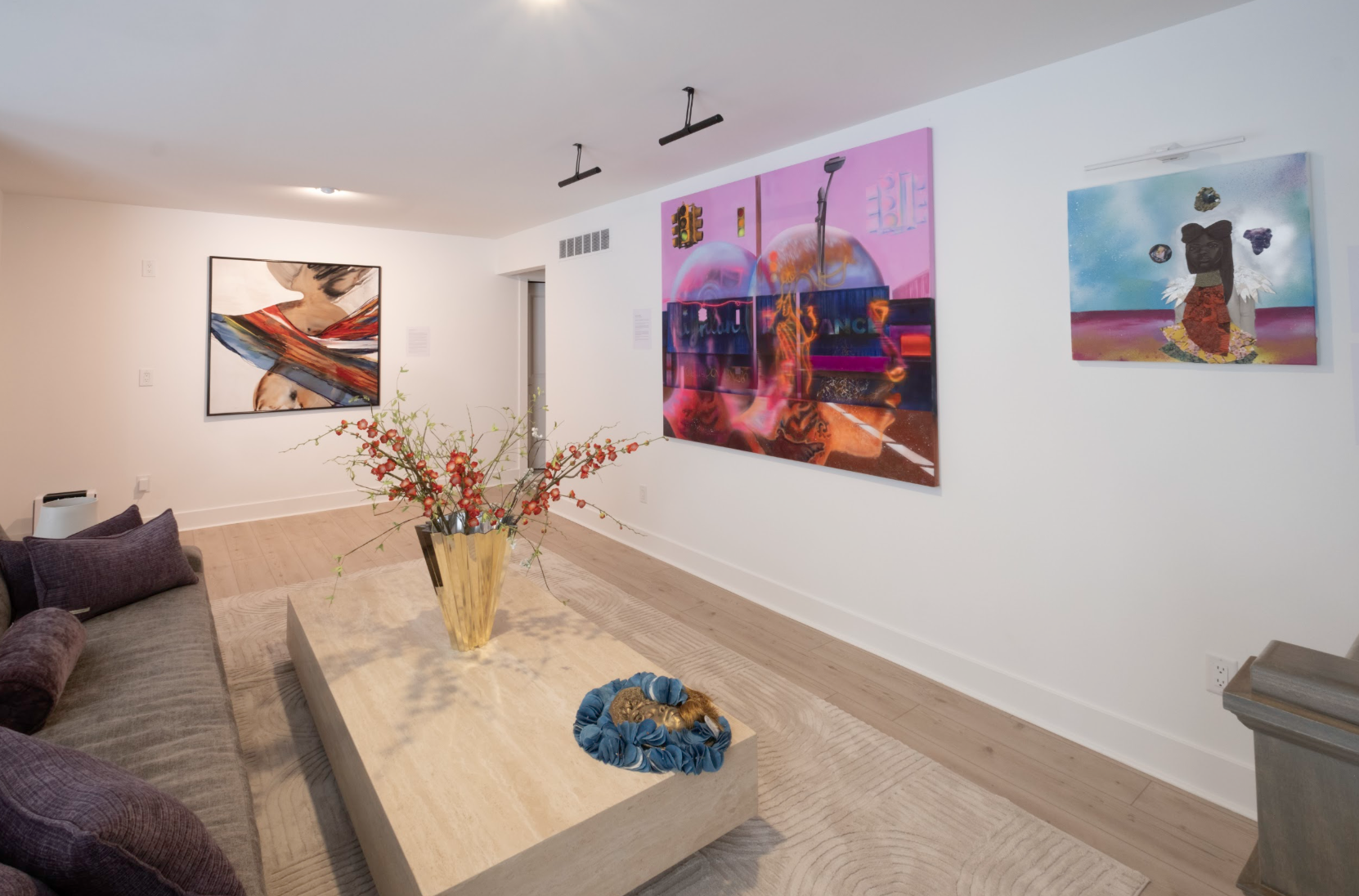
This piece kills us, it’s so good. Ijania is a young lesbian muralist in Detroit who tried her hand at painting and is eating. Period. Her work typically explores her complex relationship to and with Black men.
Ijania’s process is to approach friends and strangers, do a type of ethnographic interview, take a series of pictures and then lay an underpainting in spray paint. Spray paint y’all.
This takes her hours, not days or weeks, and the renderings are like cotton, soft focus, flesh colored, vulnerable. She then paints over that underpainting with golden acrylics and day glo neon which articulates for the men, dimension and hard edges. It’s this process that allows her to confront the thing that she is afraid of, the parts she is wrestling with.
They are all kinds of HYPE this work.
This piece was a departure. Under mentorship from elder Detroit artists, Ijania decided to paint a place…but a place for her is also complex, not static, not still, not whole. This is a replication of a photo negative of fellow artist, Oshun Williams…remembering Highland Park, Detroit. You can see his endoskeleton and the street, that intersection forms an exoskeleton. The memory itself is sliced, diced and replayed as almost a dreamscape.
When where we are often determines who we are, this work asks the question, “How does place impact the art of the displaced?”
~
Ijania is self-taught, her murals can be seen all over the Detroit. A recipient of the Kresge Institute’s Gilda award in 2021, she exhibits locally with Playground Detroit. Her most recent group was with Tanya Weddemire gallery in Brooklyn, New York.
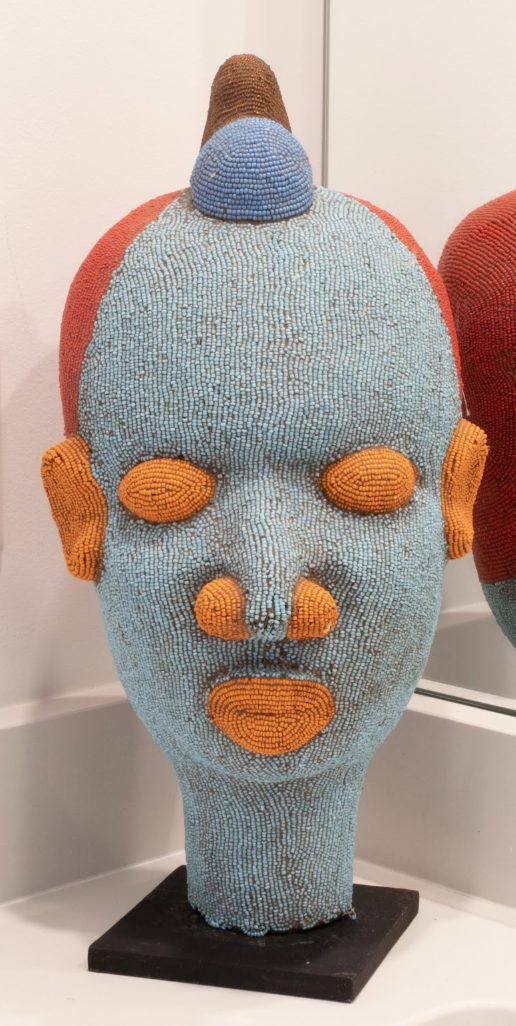
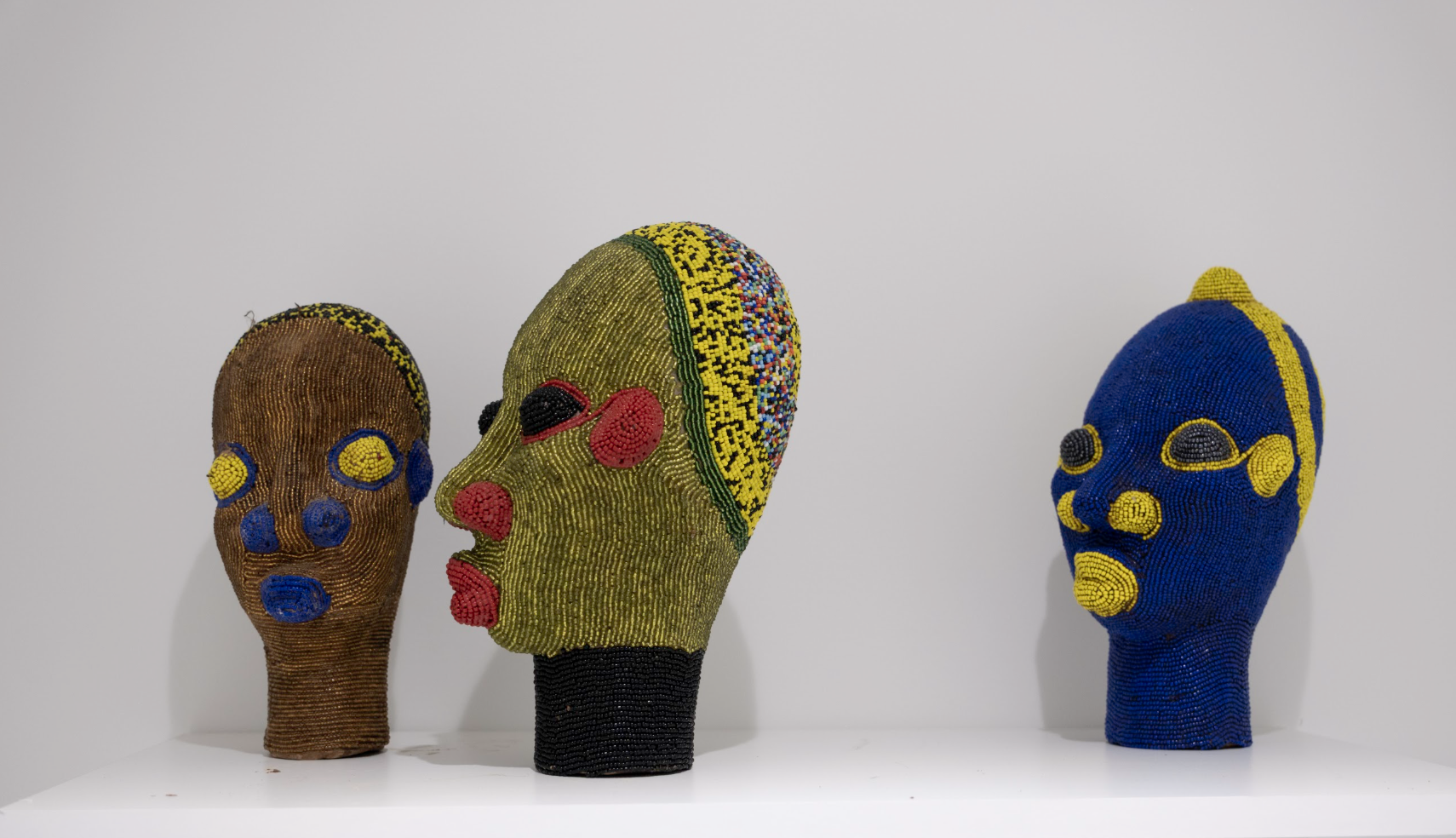
Unknown Artist(s)
Cameroon Heads (2019)
Plastic, glass and recycled beads, terracotta, muslin
Unique Work: YES
Signature: unknown
Acquisition: Medina in Marakkesh
Includes a Certificate of Authenticity: NO
Appraisal: NO
Jim McDowell, The Black Potter (b. 1945)
Small Face Jug, 2019
Worrywort, 2025
Clay, glaze
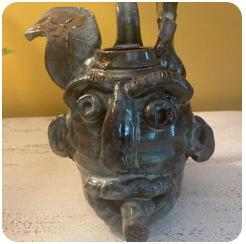
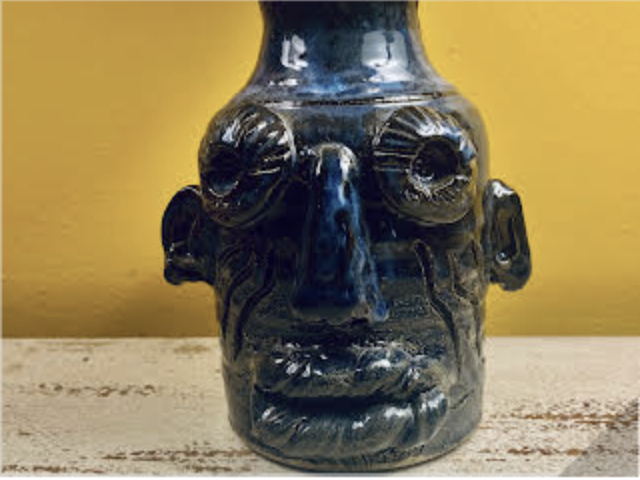
Face jugs originated in the mid-1800s in South Carolina. Crafted by enslaved Black potters, these stoneware vessels featured exaggerated features made from contrasting white clay (kaolin). They served sacred and protective purposes, often combining African ancestor worship, Caribbean voodoo traditions, and Christianity.
Experts believe face jugs were multipurpose ritual objects used to store medicinal materials and placed on graves as enslaved people were denied traditional grave markers. The grotesque faces—often with bared teeth and wide, staring eyes—were designed to scare away the devil and protect the spirit of the deceased.
The earliest known potter was David Drake, whose vessels sold for a record 1.4 million at auction this year. Drake was an enslaved African American artist who despite the extreme danger and anti-literacy laws for black people, taught himself to read. He famously inscribed his massive, alkaline-glazed stoneware vessels with his signature, dates, and original rhyming poetry. He may be one of the most important artists in history because the simple act of creation for him was an act of revolution and if caught, would have gotten him tortured and killed.
The most famous face jugs potters. now, are white, Lanier Meadows and Burlon Craig. Their work lives in museums. But the only remaining Black potter making face jugs and continuing the ancestral tradition laid out by David Drake, is Jim McDowell. He lives and works in North Carolina and like Drake, inscribes his work with a signature fish, and his poetry about the political world we live in.
Mr. Jim worked in a coal mine in Pennsylvania most of his life. One fine day at the elder age of 68, using an entire paycheck, he purchased a pottery wheel and a thousand pounds of clay and took up his craft. He writes, “As I sit at the wheel, and I believe ideas come to me from the ancestors. I make my face jugs to honor my people who came to this country in bondage through the Middle Passage and not only survived but thrived. I continue to make face jugs to keep the story alive.”
~
Mr. Jim is self-taught and is represented by three galleries in NY, is collected by high end collectors in ceramics and the subject of a PBS documentary.